If you own property in Lagos, two separate 2026 changes now shape what you pay every year and what it costs to buy or sell. The first is an amendment to the Land Use Charge (LUC) that took effect on 1 January 2026. The second is a new valuation framework for land transactions, often referred to as the “Blue Book,” in force since 1 May 2026. Together, they make holding an undeveloped plot in Lagos noticeably more expensive, and they raise the statutory cost of transferring land at the same time.

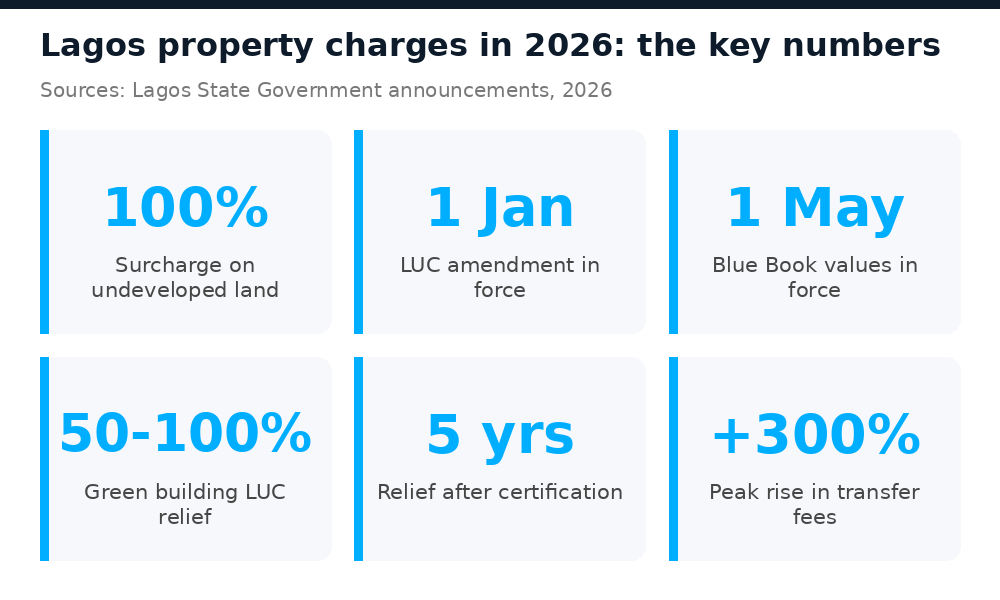
The key numbers for 2026
Before going through each change in detail, here is the shape of what changed.
The Land Use Charge amendment: undeveloped land now costs double
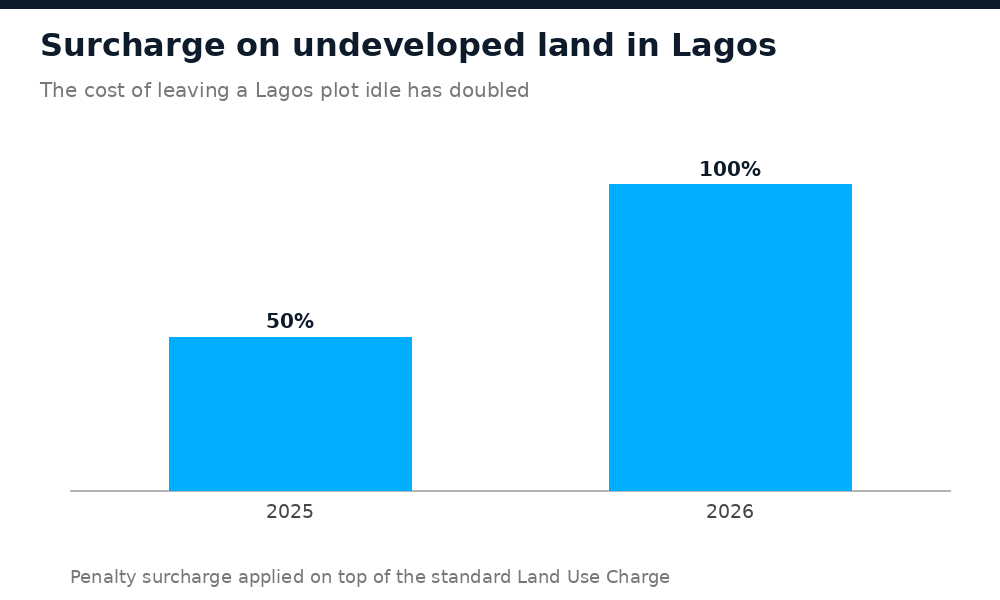
The Lagos State Government’s LUC (Amendment) framework, effective 1 January 2026, doubled the penalty surcharge applied to undeveloped plots: it now stands at 100%, up from 50% previously. In practice, this means the annual charge on land you are simply holding, with no structure on it, is now twice what it was under the old rule.
There is a counterweight built into the same reform. Buildings certified under the Nigeria Green Building Council (NGBC) at Level 2 or above can qualify for a 50% to 100% LUC exemption for the first five years after certification, depending on the certification level. Reported savings from this relief range from roughly NGN 2 million to NGN 45 million a year, depending on the property’s assessed value. For an owner planning to develop, this changes the calculus: the reform does not just penalise idle land, it also rewards a specific kind of building.
The Lagos State Government has also been actively enforcing the previous year’s charge alongside the new 2026 bills, so unresolved 2025 balances do not disappear — they compound with what you owe under the new rules.
The 2026 “Blue Book”: land transactions cost more too
Separately from the annual charge, Lagos State introduced a new Fair Market Value framework for land transactions — commonly called the “Blue Book” — effective 1 May 2026. It revises the reference values used to calculate statutory transaction charges: Governor’s consent fees, stamp duties and related assessments. Reports from high-value districts describe some transaction fees rising by as much as 300% under the new values.
What this means concretely: if you are buying, selling or perfecting title on a Lagos property this year, do not assume last year’s fee schedule still applies. Ask your lawyer or the relevant Lagos Ministry of Finance office for a quote under the current Blue Book values before you budget a transaction.
How to check what you actually owe
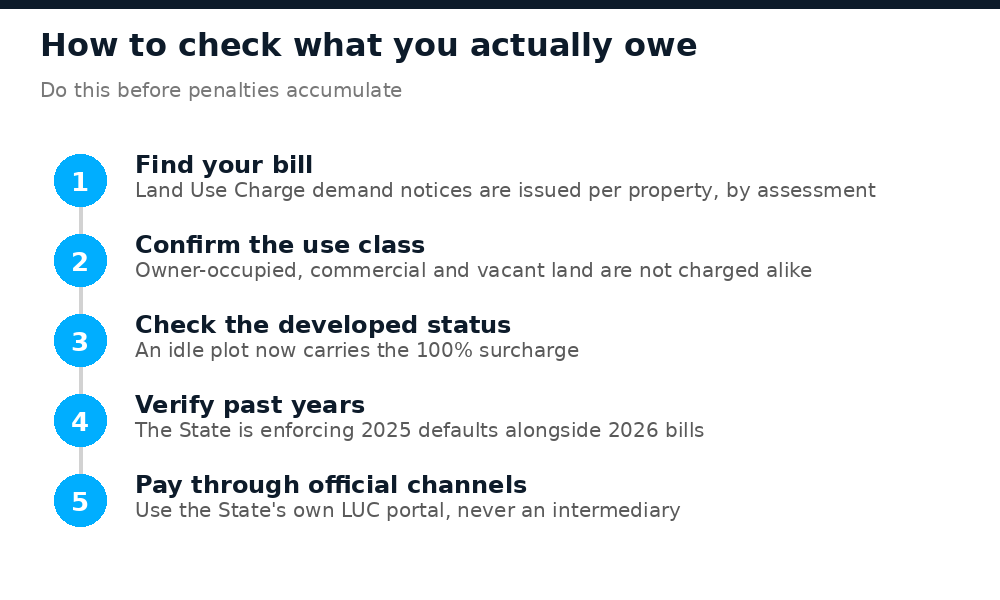
The official channel for LUC assessment and payment is the Lagos State Government’s own portal. Never pay an intermediary who claims to “sort out” your LUC status outside that channel — the assessment is tied to your specific property and is public information you can verify yourself.
Should you hold, develop, or sell an idle plot?
The 2026 rules change the economics of simply waiting on a Lagos plot without building. Here is what still works in your favour, and what now works against you.
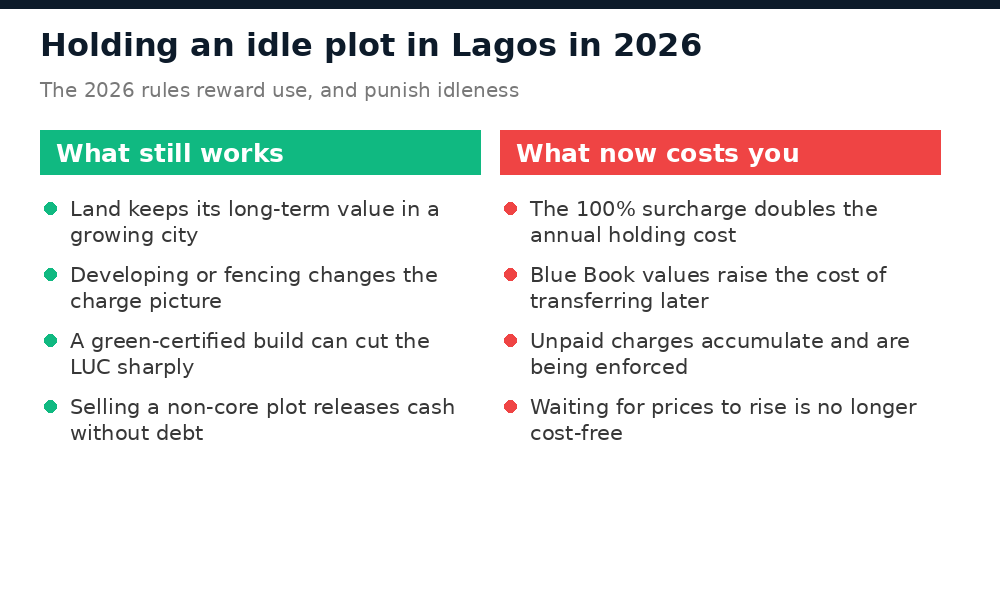
Some owners are already responding by selling off plots that are not part of a near-term building plan, since the annual holding cost on undeveloped land has effectively doubled and shows no sign of reverting.
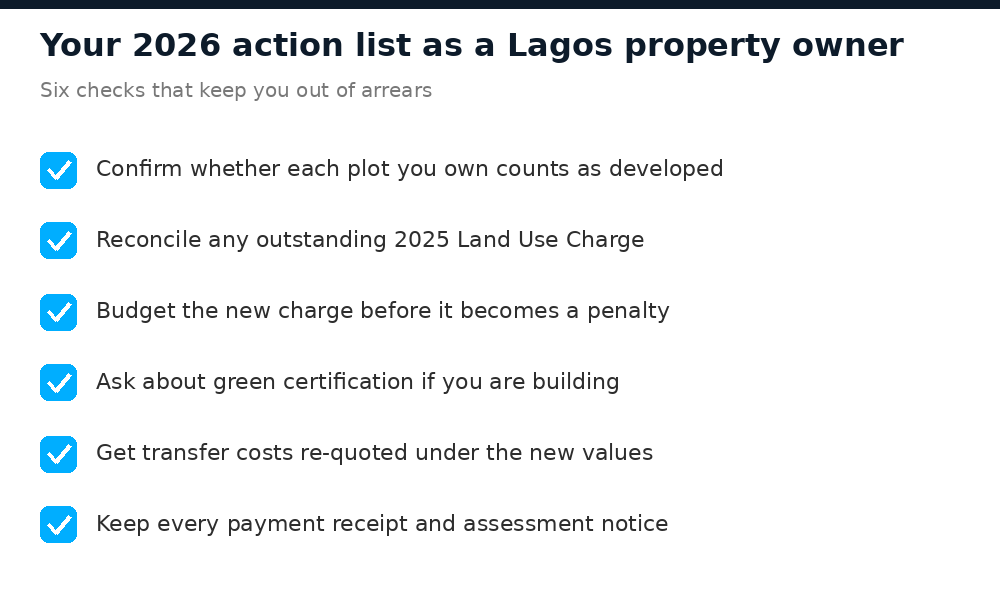
Your 2026 action list
Frequently asked questions
Does the 100% surcharge apply to every plot I own?
It applies specifically to land classified as undeveloped. A plot with an existing structure, even a modest one, is assessed differently. If you are unsure how your property is classified, check your assessment notice or contact the LUC unit directly rather than assuming.
Is the Blue Book the same thing as the Land Use Charge?
No. The Land Use Charge is an annual property tax. The Blue Book is a valuation framework used to calculate one-off transaction charges — Governor’s consent, stamp duty and similar fees — when land changes hands. A property owner can be affected by one, both, or neither, depending on whether they are holding land or transacting on it this year.
Can green certification really cut my LUC bill?
Reported relief levels range from 50% to 100% of the charge for five years after NGBC Level 2+ certification. The exact savings depend on your property’s assessed value, so get a specific figure from a qualified assessor before deciding whether certification is worth pursuing for a given building.
This article summarises publicly reported 2026 changes to Lagos property charges. Rates, thresholds and enforcement practices can change — always confirm your specific assessment through the official Lagos State channels before paying or budgeting.