If you rent in prime Lagos, the numbers barely need explaining. A three-bedroom apartment in Ikoyi that let for around NGN 15 million a year in 2022 now averages closer to NGN 35 million, with the top of the market well above that. In Lekki Phase 1, studios and one-bedroom units have moved from roughly NGN 2.5 million to NGN 7.5 million over the same period. Here is why — and what it means if you are renting or investing.
The scale of the move
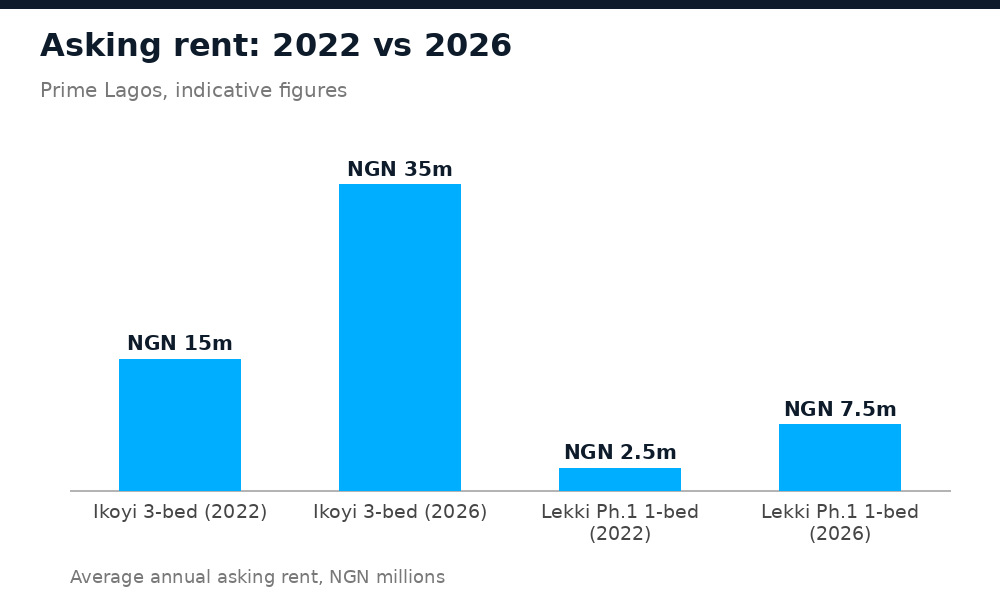
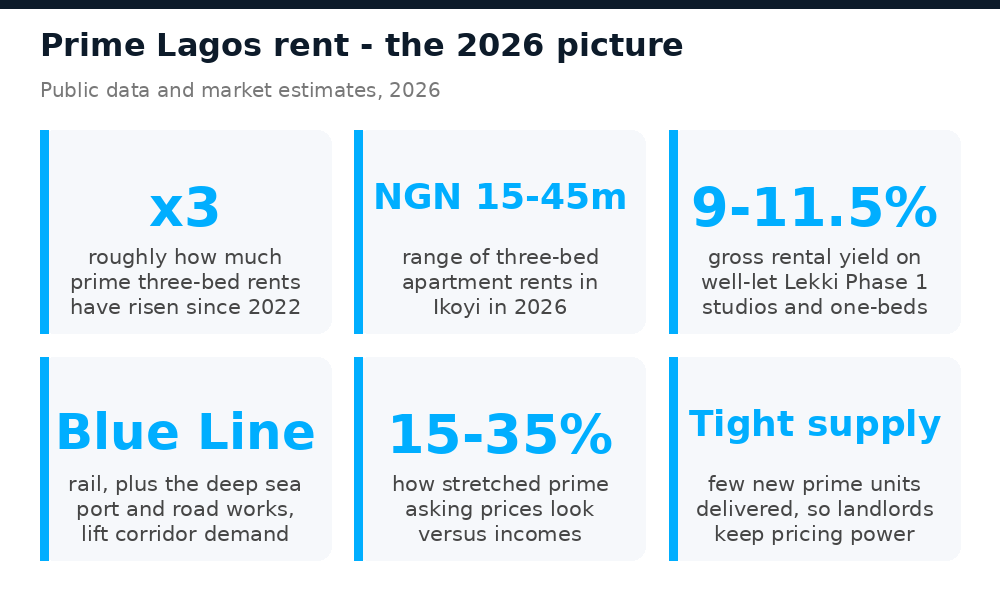
Roughly a threefold rise in four years. Three-bed rents in Ikoyi in 2026 span a wide NGN 15–45 million band depending on the building, the finish and whether service charge is bundled in. That dispersion matters: the “average” hides serviced, newly delivered blocks at the top and tired older stock at the bottom.
What is driving it
- Currency and construction costs. Naira weakness pushed up the cost of imported finishes, fittings and, indirectly, replacement cost — landlords price to that.
- Tight prime supply. Few genuinely new prime units have been delivered in Ikoyi and Lekki Phase 1, so landlords keep pricing power.
- Infrastructure demand. The Lagos Blue Line and Red Line, the Lekki Deep Sea Port and road expansion have concentrated demand along the Lagos Island–Lekki corridor.
- Dollar-linked expectations. Many prime landlords and their tenants think in dollars; when the naira slides, naira rents are marked up to hold the dollar value.
Where the yields are
Rising rents have lifted gross rental yields on well-let Lekki Phase 1 studios and one-bedroom units to about 9.0–11.5% — high by international standards. Ikoyi three-beds typically yield less on a percentage basis because capital values are also elevated, but they offer larger absolute rent cheques and, for some owners, a currency hedge.
Two cautions for investors. First, gross is not net: service charge shortfalls, void periods, agency fees and maintenance can take 2–4 percentage points off. Second, prime asking prices look about 15–35% stretched against local incomes, so today’s yield rests on rents staying high.
What it means for tenants
Negotiate on total cost, not headline rent: ask what the service charge covers, whether it is capped, and what is actually delivered (power hours, water, security, lift maintenance). Where a renewal quote jumps sharply, price up the cost of moving — agency and legal fees, a new caution, logistics — against staying. Sharing a larger unit, or looking one ring out (Oniru, Victoria Island fringes, Lekki Phase 1 back streets), can reset the maths.
What it means for investors
Lekki Phase 1 compact units are where the yield story is strongest, but they are also the most exposed to new supply and to any softening in rents. Underwrite conservatively: use a realistic void assumption, budget for the service charge gap, and stress-test the deal at a rent 15–20% below today’s asking level.
Frequently asked questions
Have Ikoyi rents really tripled since 2022?
On average, close to it: a typical three-bed has moved from about NGN 15 million to about NGN 35 million a year, with a wide range around that figure.
What rental yield can I expect in Lekki Phase 1?
Around 9.0–11.5% gross on well-let studios and one-beds. Net yields are lower once voids, fees and service-charge shortfalls are deducted.
Why are naira rents linked to the dollar?
Many prime landlords price to dollar value and replacement cost. When the naira weakens, naira rents are marked up to preserve that value.
Is now a good time to buy for rental income?
The income case is strongest in Lekki Phase 1 compact units, but prime prices look stretched versus incomes. Underwrite with a conservative rent and void assumption.
How do I push back on a big renewal increase?
Negotiate on total cost including service charge, ask for a cap, and compare the all-in cost of moving with staying before you agree.