For years, ground rent in Abuja was a bill many property owners quietly ignored. That changed in 2026. The Federal Capital Territory Administration (FCTA) has moved from issuing warnings to actually sealing properties and revoking titles over unpaid ground rent, Certificate of Occupancy (C of O) fees and land-use conversion charges. If you own property in the FCT, this is no longer a bill you can defer indefinitely.

The scale of enforcement so far
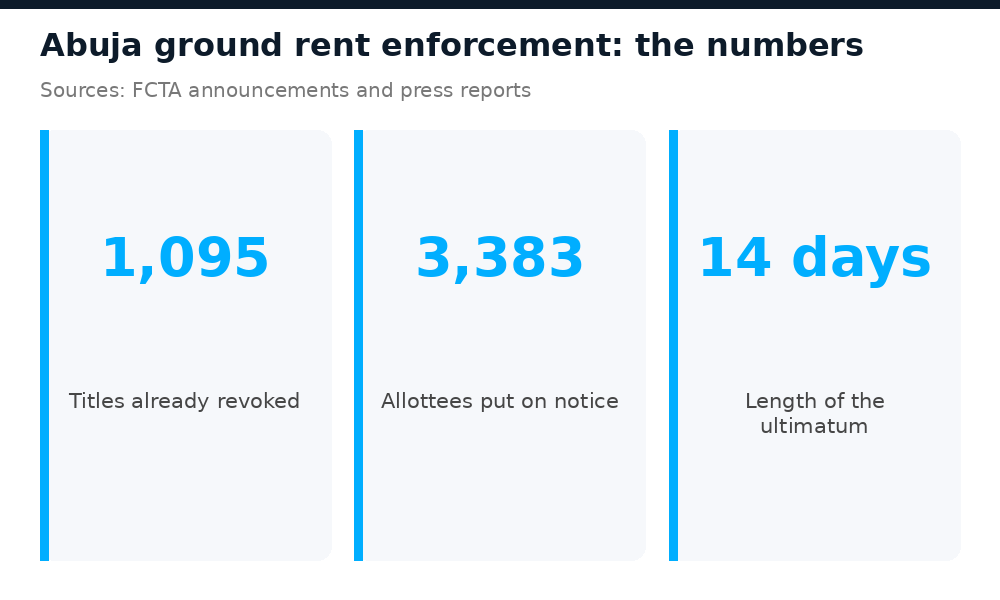
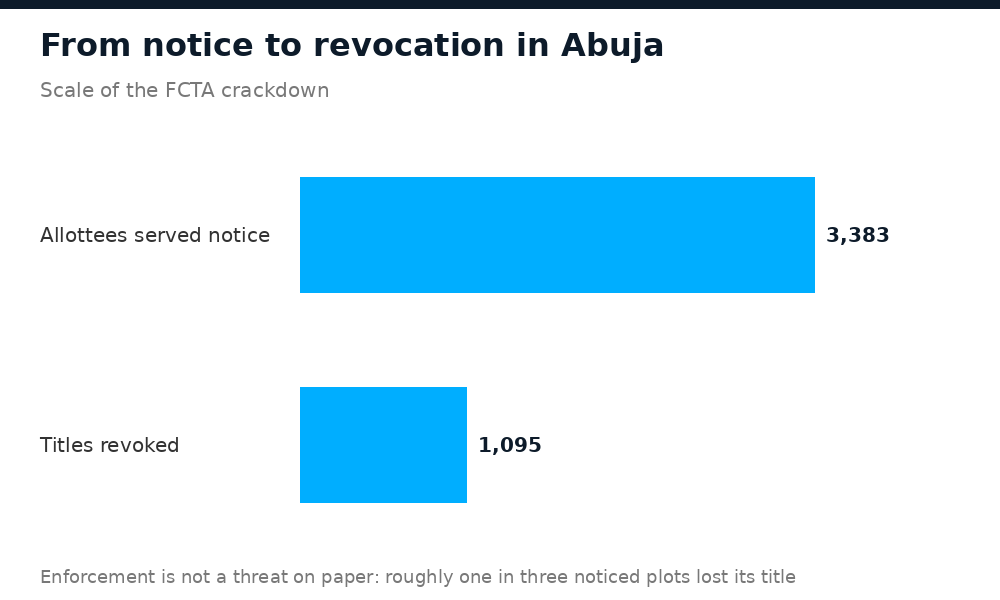
The FCT Minister ordered a crackdown on defaulting Abuja property owners following the first 2026 FCTA Executive Council meeting, and enforcement — sealing followed by revocation — has continued since. An earlier ultimatum gave a 14-day notice period to 3,383 allottees, a list that reportedly included embassies and even a former FCT minister, underlining that the enforcement is not selective. Separately, the FCTA has confirmed that 1,095 Abuja property titles have already been revoked for non-payment of ground rent and land-use fees.
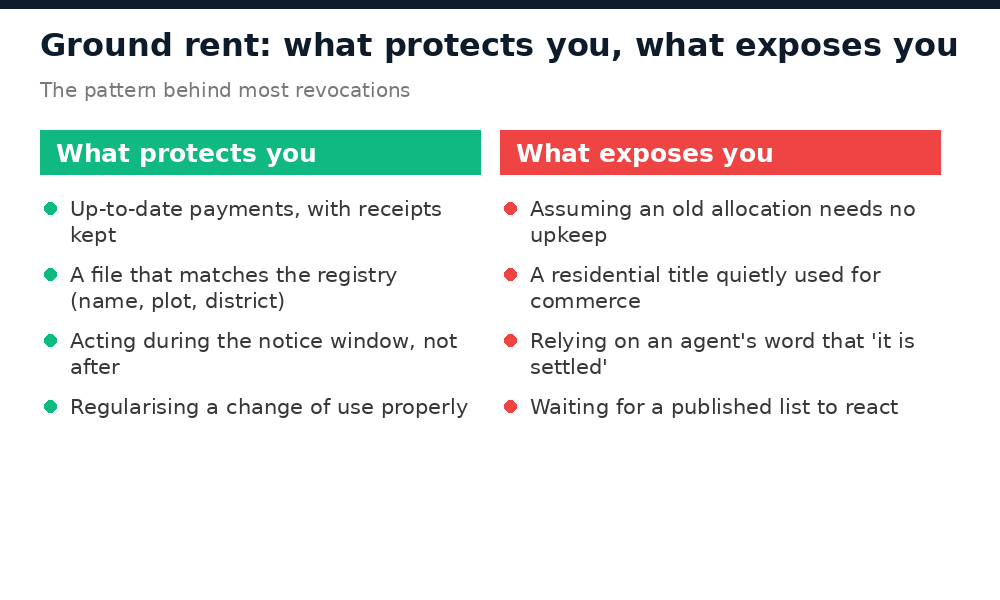
A particular focus of enforcement has been residential titles that were converted to commercial use without meeting the statutory obligations that come with that conversion — a common practice in Abuja that the FCTA is now treating as a compliance gap, not a formality.
The legal basis: Section 28 of the Land Use Act
Revocation is not an administrative whim — it is grounded in law. Section 28 of the Land Use Act allows the government to revoke a Right of Occupancy for breach of its terms, including non-payment of ground rent. Once revoked, a plot reverts to government ownership and can be re-allocated to someone else entirely.
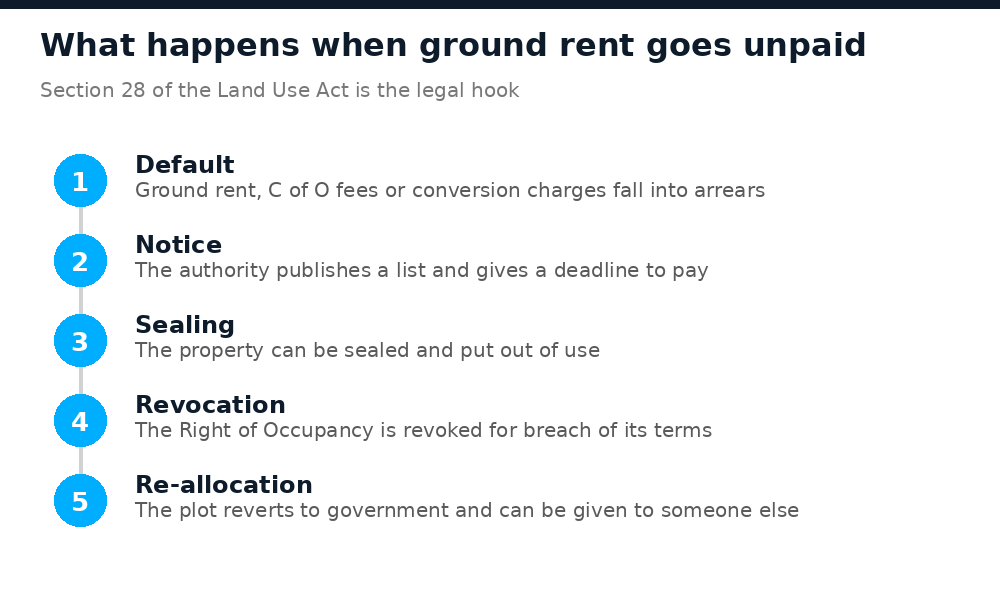
This is the sequence worth understanding: default does not immediately mean revocation. There is a notice period first, and sealing typically precedes outright revocation. That gap is your window to act.
How to check your status on AGIS
The Abuja Geographic Information System (AGIS) is the FCTA’s official platform for property records, including ground rent status. Checking your own standing takes a few steps.
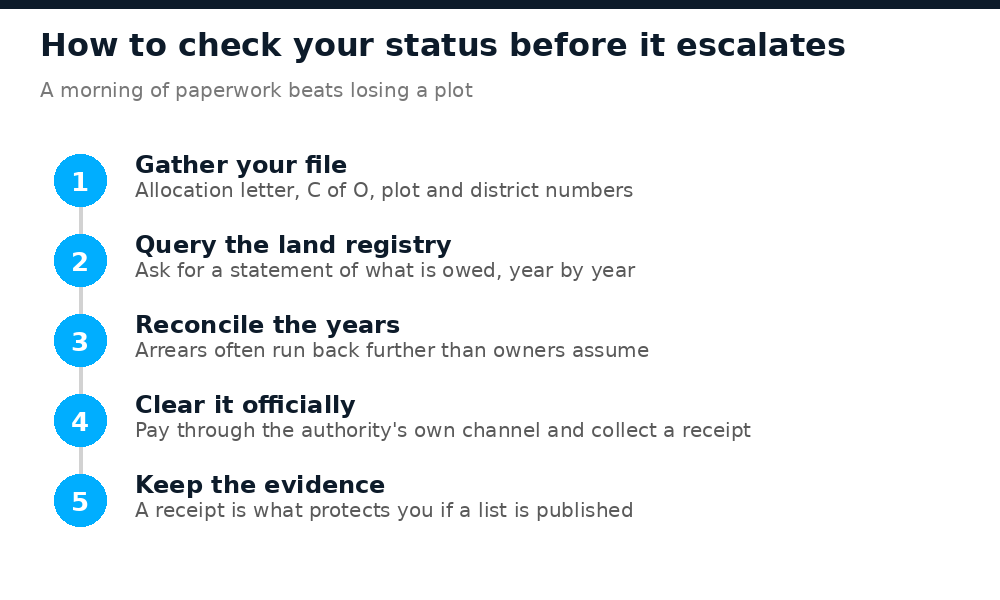
Use the AGIS platform directly, and the FCTA’s own ground rent payment page for clearing any arrears. Avoid agents or middlemen who claim they can “clear” your record faster outside these official channels — a title is a legal document, and there is no shortcut that bypasses the government’s own register.
What protects you, and what puts you at risk
Frequently asked questions
Can a revoked title be recovered?
It is much harder once revocation is complete and the plot has been formally reverted to government ownership, since the land can then be re-allocated to a new applicant. This is exactly why checking your status proactively, before a notice arrives, matters more than trying to contest a revocation afterward.
Does converting a residential plot to commercial use automatically trigger revocation?
Not automatically, but it has become a specific focus of FCTA enforcement in 2026. If you have converted use without formally regularising it and paying the associated charges, that plot carries materially higher risk than one still used and registered as originally allocated.
I have not received any notice — does that mean I am not at risk?
Not necessarily. With thousands of allottees already processed and enforcement ongoing, the safest approach is to check your own AGIS record directly rather than wait to see whether a notice arrives.
This article summarises publicly reported 2026 FCTA enforcement actions. Ground rent rates, notice periods and procedures can change — verify your specific status and any amount owed directly through AGIS or the FCTA before taking action.