Two forces are pushing buyers outward. In Lagos, prices in the Ibeju-Lekki and Epe corridor have jumped sharply, and asking prices across the city have outrun wages. In Abuja, ground rent enforcement and the cost of serviced districts have done something similar. The result is predictable: ordinary buyers are crossing the state line — into Ogun on the Lagos side, into Nasarawa on the Abuja side.
The commuter belt is a legitimate strategy. It is also where the worst land stories come from. This guide separates the two.
Price the commute before you price the land
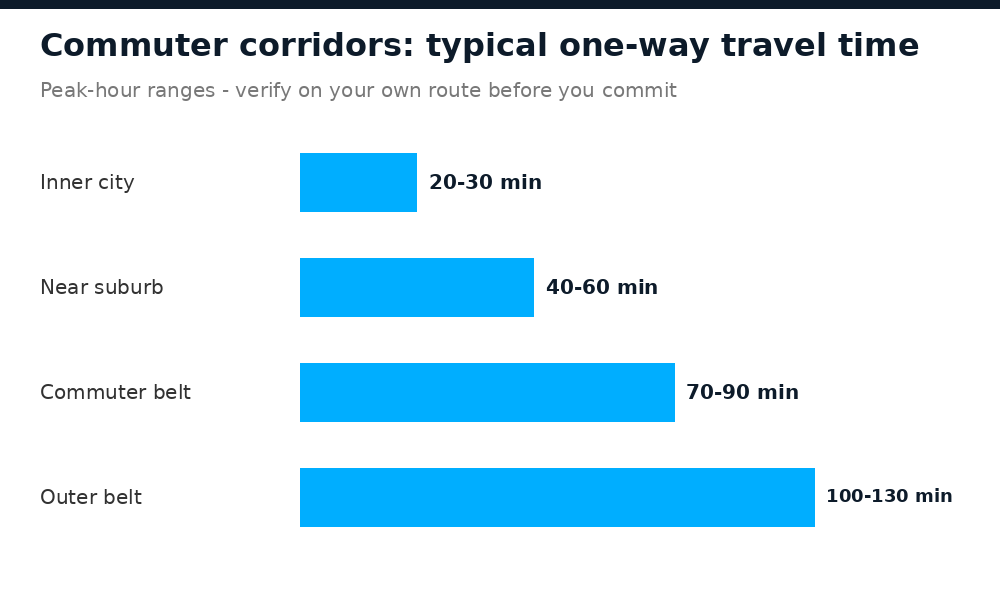
The single most common mistake is comparing plot prices while ignoring what the journey will cost you every working day for the next decade.
Do the arithmetic properly. Take your realistic peak-hour one-way time — not the Sunday-afternoon drive the agent showed you. Double it. Multiply by roughly 240 working days. A corridor that adds 45 minutes each way is taking about 360 hours a year out of your life, plus fuel or transport fares, plus vehicle wear.
Then ask the question that actually matters: is the price gap per plot larger than the ten-year cost of that commute? Sometimes it clearly is — and the purchase is rational. Sometimes it is not, and a smaller plot closer in wins.
Two practical adjustments. First, weight heavily any corridor with a completed or near-complete road or rail improvement; travel time there is a moving target in your favour. Second, if you are buying to hold rather than to live in, commute time matters less than the direction of infrastructure spending.
The title checks that actually protect you
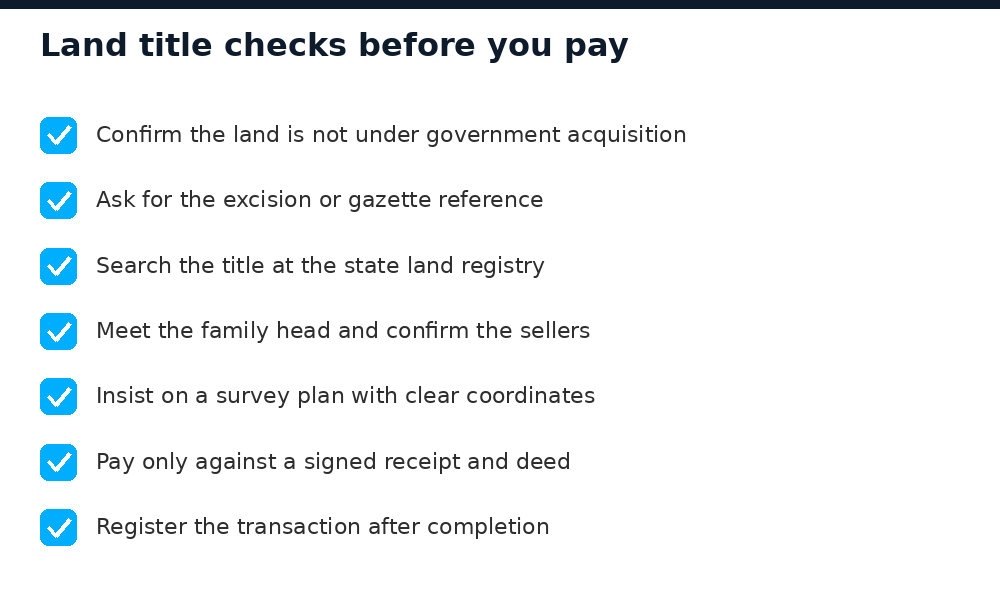
Government acquisition first. Before anything else, establish whether the land sits under a government acquisition or a committed scheme. This is the check that separates a plot you will own from a plot you will lose. Lagos publishes lists of estates and schemes that are not approved; treat the equivalent enquiry in Ogun or Nasarawa as compulsory, not optional.
Excision and gazette. If the land is family land within an acquisition area, ask for the excision reference and the gazette details, then verify them at source. “The excision is in process” is not a title.
Registry search. Run a search at the relevant state land registry. It costs a fraction of the plot price and is the only way to see registered interests.
Confirm who can sell. Meet the family head and the accredited signatories, and get the list of who must sign. A plot sold by one branch of a family without the others is the classic route to a demolition or a court injunction years later.
Survey plan with coordinates. Insist on a survey plan you can independently check. A hand-drawn sketch with no coordinates is not a survey.
Pay against paper. Signed receipt, then deed. Never cash into a personal account against a promise.
Register after completion. The deal is not finished when you pay; it is finished when the transaction is registered.
Ogun and Nasarawa: what is actually different
On the Lagos side, the Ogun corridor benefits from industrial and logistics investment along the main routes, which supports both rental demand and resale. The risk profile is dominated by overlapping community claims and estates marketed before their status is settled.
On the Abuja side, the Nasarawa corridor is essentially a housing-cost story: buyers priced out of the city buying within commuting distance. The risk profile leans more towards documentation quality and infrastructure that lags behind the marketing brochure — plots sold as “serviced” with no water, no power connection and an unpaved access road.
In both cases the same rule applies: buy on the road, not on the map. Visit at least twice, including once in the rain, and once at peak hour.
Red flags worth walking away from
- Pressure to pay today for a “promo price” that expires this week.
- A survey plan you are shown but not allowed to photograph.
- Sellers who cannot produce the excision or gazette reference on request.
- An estate whose access road exists only on the layout drawing.
- Payment requested into a personal account rather than a company account.
- Anyone discouraging you from doing a registry search.
Frequently Asked Questions
Is buying land in the commuter belt cheaper than buying in Lagos or Abuja?
Per plot, almost always yes — often dramatically so. Whether it is cheaper overall depends on the commute cost over your holding period and on the infrastructure timeline. Run the ten-year arithmetic before concluding you have found a bargain.
What is an excision, and why does it matter so much?
An excision is the release of a portion of land from a government acquisition back to the original community. If land inside an acquisition area has not been excised, the community cannot validly sell it to you — regardless of how convincing the paperwork looks. Always ask for the excision reference and verify it independently.
Can I verify a title without travelling to the state?
You can instruct a lawyer or a licensed surveyor to run the search on your behalf, which is what most diaspora buyers do. What you should not do is rely on the seller or the marketing agent to conduct the verification for you.
Should I buy a serviced plot or raw land?
Serviced plots cost more but are habitable sooner and are easier to resell. Raw land is cheaper and suits a long hold, provided you have verified the title and can wait for infrastructure. The mistake is paying a serviced-plot price for land that is serviced only in the brochure — go and look at the roads and the water supply yourself.
How long should I plan to hold commuter-belt land?
Treat it as a long hold. Value in these corridors is driven by infrastructure and population spread, both of which move over years rather than months. If you may need the money back within two or three years, this is the wrong asset.