Ask around in Lagos or Abuja and you’ll hear the same complaint: homes have become too expensive. Asking prices for houses in prime areas now top ₦400 million, while salaries and mortgages have barely moved. So are Nigerian homes genuinely overpriced in 2026 — or is it more complicated? Here’s an honest look, and what it means for you.
The affordability squeeze
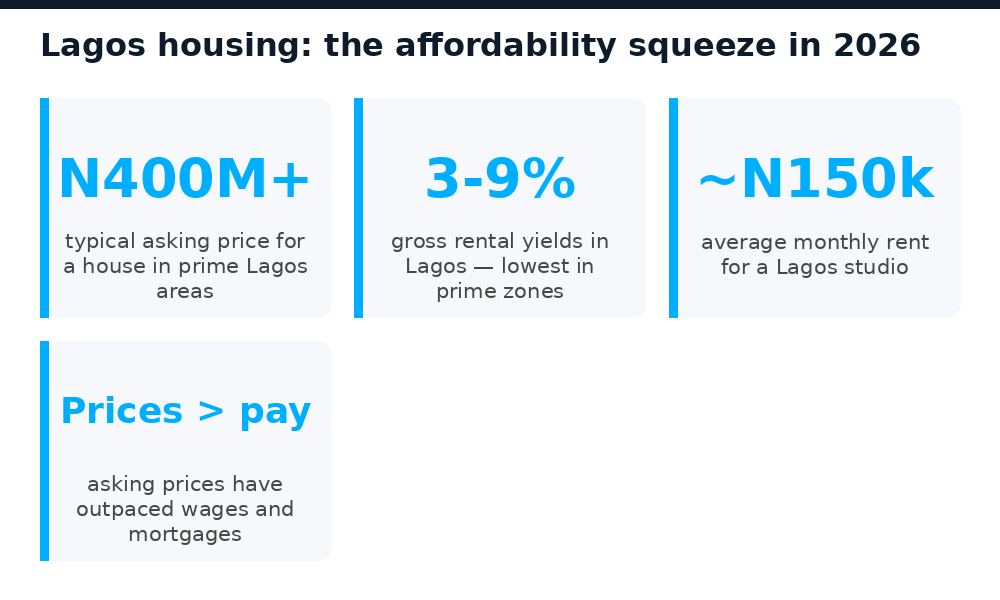
The numbers tell the story. In the priciest Lagos neighbourhoods — Ikoyi, Victoria Island, Lekki Phase 1 — asking prices have raced ahead of what most people earn. Rental yields there sit as low as 3%, a classic sign that prices are high relative to the rents they command. Meanwhile a modest studio can still cost around ₦150,000 a month to rent. When prices rise faster than incomes and mortgage access stays limited, affordability gets squeezed.
Why prices ran ahead of wages
Several forces pushed prices up: inflation and naira volatility drove owners to price in hard-currency terms, especially at the top end; land scarcity in prime zones is real; and construction costs — cement, steel, finishes — climbed sharply. Add strong demand from the diaspora and high-net-worth buyers, and prime asking prices detached from local salaries.
So, are homes overpriced?
Partly. In the prime segment, many properties do look overpriced versus incomes and rental yields. But step outside Ikoyi and Lekki Phase 1 and the picture changes: value-focused areas on the mainland and emerging corridors offer yields closer to 8–9% and prices that make more sense. In other words, it’s less “Nigeria is overpriced” and more “the prime segment is stretched.”
Buying at today’s prices: upsides and watch-outs
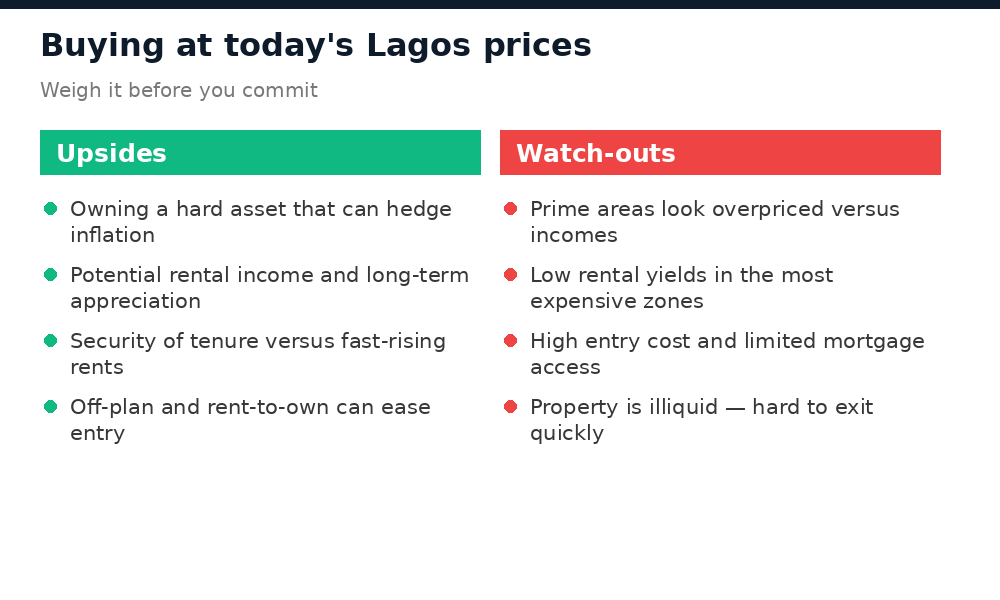
Property still offers real advantages — a hard asset that hedges inflation, potential rental income, and security against fast-rising rents. But go in clear-eyed: prime areas can be overpriced, yields there are thin, entry costs are high and property is illiquid if you need to sell quickly.
What buyers should do
- Look beyond the prime postcodes. Emerging and value areas often deliver better yields and more room to negotiate.
- Buy on yield, not hype. Compare the annual rent to the price; a low yield is a warning that you may be overpaying.
- Use off-plan or rent-to-own carefully. They can ease entry, but verify the developer and the title first.
- Negotiate hard. With affordability stretched, sellers of stale listings are often flexible.
- Verify the title (Certificate of Occupancy) before parting with money.
Frequently asked questions
Will prices fall in 2026?
A sharp crash is unlikely while land is scarce and building costs stay high, but stretched prime prices can stagnate. Value areas are more likely to hold or rise.
Is it better to rent or buy right now?
If you’d buy in an overpriced prime zone at a 3% yield, renting and investing the difference can make sense. In value areas with higher yields, buying is more compelling.
How do I know if a specific home is overpriced?
Work out the gross rental yield (annual rent ÷ price). If it’s far below what similar homes nearby achieve, the asking price is probably too high.
Bottom line: Nigerian homes aren’t uniformly overpriced — the prime segment is. Shop on yield, widen your search, verify the paperwork, and you can still buy well in 2026.