Every rainy season, parts of Lagos remind buyers and tenants of something the listing photos never show: not all plots handle heavy rain the same way. Reclaimed waterfront land, canal-adjacent estates in Lekki, and low-lying pockets of Ajah and Lagos Island flood with a regularity that rarely makes it into a property brochure. For anyone buying or renting in these areas, understanding real flood exposure is now as important as checking the title.
Where the risk concentrates
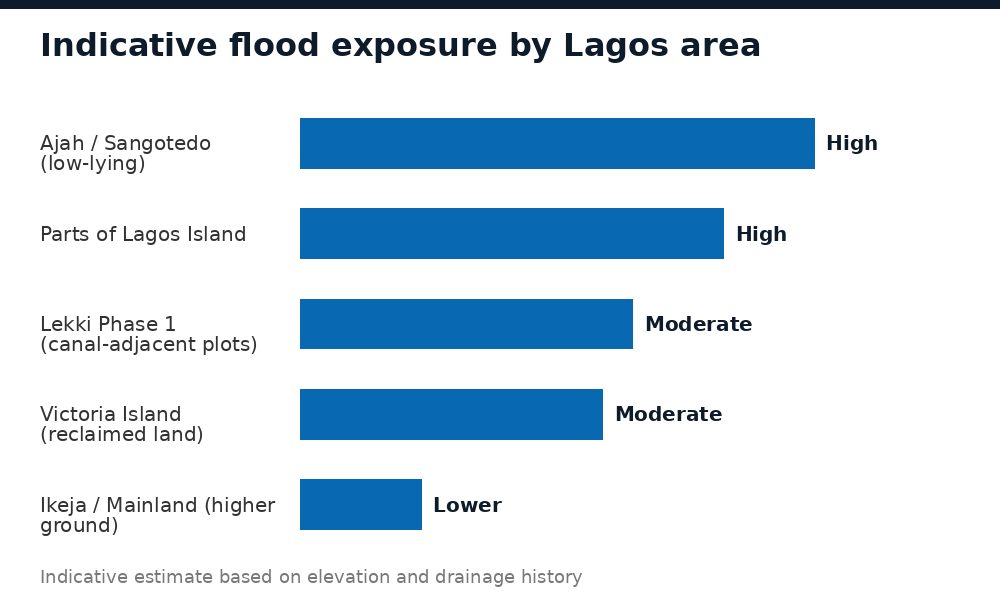
Flood exposure in Lagos is not evenly spread. Low-lying, rapidly developed areas like Ajah and Sangotedo sit at the sharper end, along with parts of Lagos Island where drainage infrastructure has struggled to keep pace with density. Lekki Phase 1 plots near canals and waterways carry moderate exposure, as does much of Victoria Island, built substantially on reclaimed land. Higher-ground mainland districts like Ikeja are comparatively better positioned, though no part of the city is entirely risk-free in a severe storm.
Why some plots flood more than others
Three factors do most of the work: elevation relative to the surrounding street and nearest canal, the condition of local drainage — silted or blocked channels turn a heavy shower into standing water fast — and, for a growing share of Lagos’s most valuable real estate, whether the land was reclaimed from the lagoon and how well that reclamation was engineered. Reclaimed land is not inherently unsafe, but it demands more scrutiny of the underlying engineering than naturally elevated ground.
The checklist before you commit
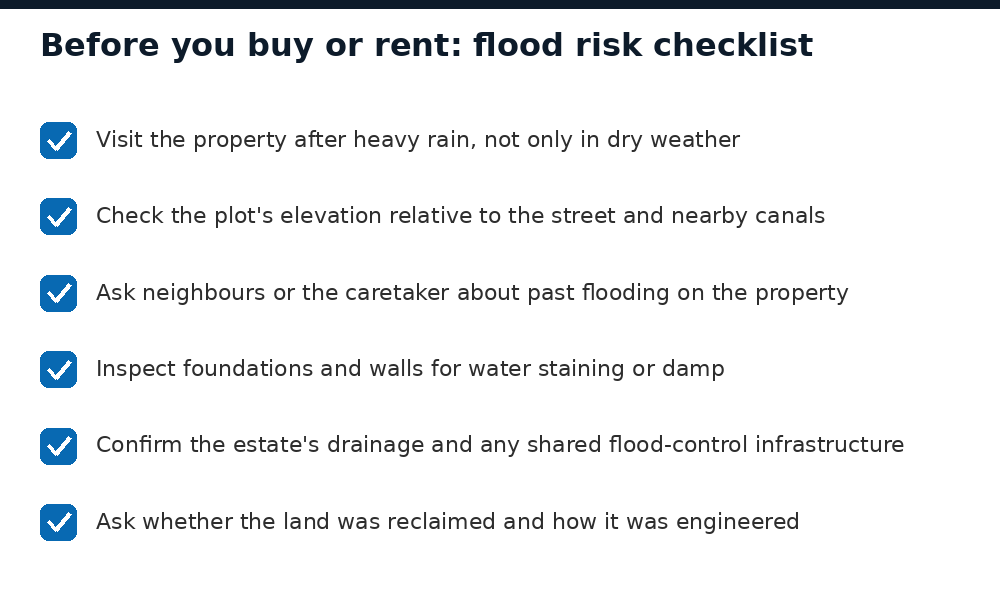
The single most useful thing you can do costs nothing: visit the property after a heavy rain, not just on a dry, sunny viewing day. Beyond that, check the plot’s level against the street and any nearby canal, ask the caretaker or long-term neighbours whether the property has flooded before, and inspect foundations and lower walls for water staining or persistent damp — these tell a more honest story than any sales pitch.
What actually makes a property more resilient
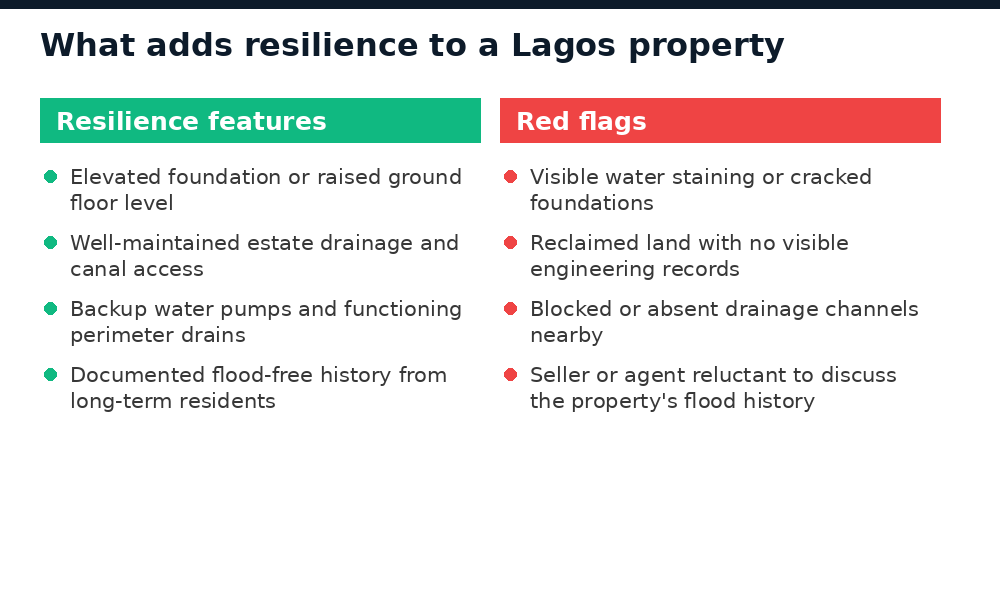
A raised foundation or elevated ground floor, well-maintained estate drainage with clear canal access, functioning backup pumps, and a documented flood-free track record from residents who have lived there for years are all genuine signals of resilience — and increasingly, genuine selling points that justify a premium. On the other side, visible water staining, cracked foundations, blocked drainage nearby, or a seller who deflects questions about the property’s flood history are red flags that should slow down, not speed up, a transaction.
Buying or renting smart in exposed areas
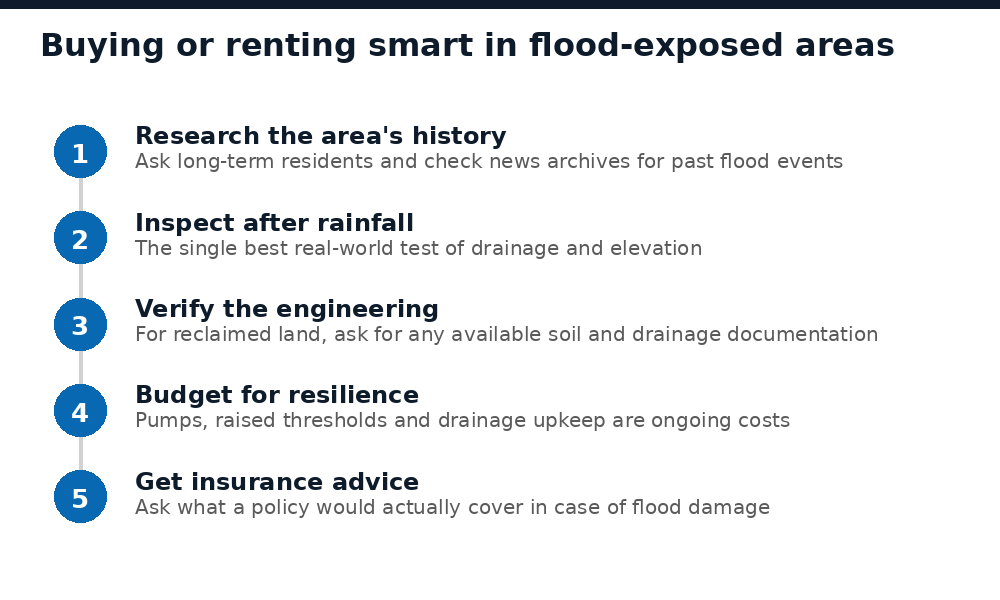
None of this means avoiding Lekki, Victoria Island or Ajah altogether — these remain some of Lagos’s most sought-after addresses for good reason. It means budgeting for resilience as an ongoing cost, not a one-time fix: pumps need maintenance, raised thresholds need upkeep, and estate-level drainage needs active management by whoever runs the property or the residents’ association. Ask directly what a landlord, developer or insurance policy would actually cover in the event of flood damage, rather than assuming standard coverage applies.
The bottom line
Flood risk in Lagos is a known, mappable pattern, not a random event — and buyers who treat it that way make better decisions than those who focus purely on finish and floor plan. A property’s real value in flood-exposed areas depends as much on elevation, drainage and engineering history as it does on square footage. Ask the uncomfortable questions before you sign, and a beautiful listing photo won’t be the only thing you know about a property’s true condition.
This article is general information, not engineering or insurance advice; consult a qualified surveyor or insurer for a property-specific flood risk assessment.