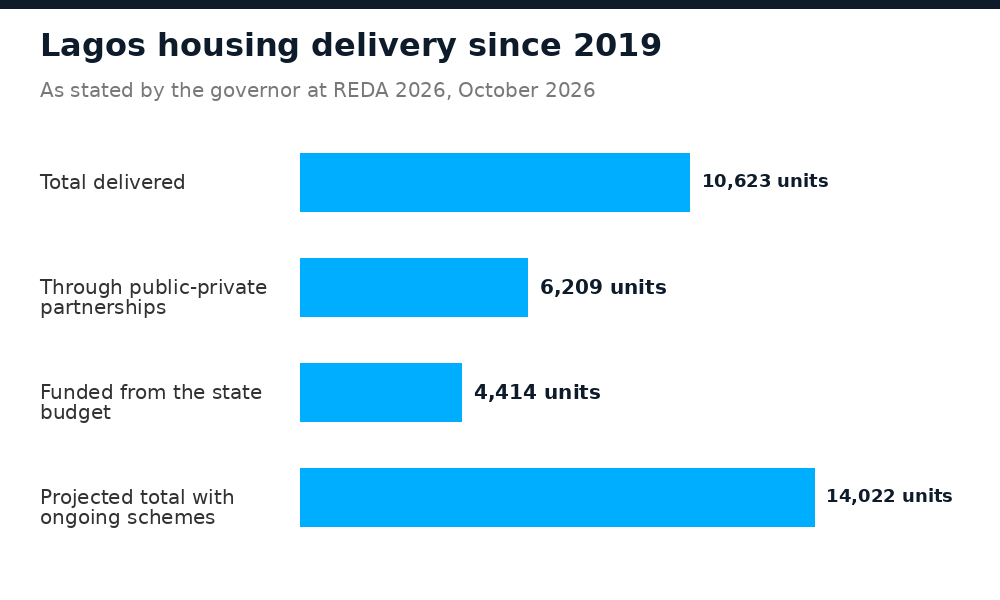
At the Real Estate Discussions and Awards (REDA 2026) in Ikeja, Governor Babajide Sanwo-Olu said Lagos has delivered 10,623 housing units across 23 estates in the state’s five divisions since 2019: 4,414 funded from the state budget and 6,209 through public-private partnerships. Ongoing schemes are expected to bring the total to 14,022 units.
A few days earlier, on 11 October, the Lagos State Ministry of Housing met allottees of state-owned estates in Epe Division with a clear message: allottees must strictly follow the terms of their allocation, or risk having it revoked. If you hold, or are about to receive, a Lagos government home, here is what your allocation documents usually govern, the habits that put a home at risk, and how to protect yourself.
The 30-second summary
- Lagos says it has delivered 10,623 homes across 23 estates since 2019, with 14,022 expected once ongoing schemes are complete.
- On 11 October 2026, the Ministry of Housing reminded Epe allottees that breaching allocation terms can lead to revocation.
- Revocation is described as a last resort, after notices of contravention and due legal process.
- Your allocation letter and the scheme’s terms and conditions are the documents that prevail.
- Pay only through official channels, ask in writing before any alteration, and keep every receipt.
What did Lagos tell allottees in October 2026?
At a monthly stakeholders’ meeting held at Chois City Estate, Agbowa, the Ministry of Housing briefed residents of state-owned estates in Epe Division on updated housing policies, environmental standards and communal living guidelines, and collected feedback on operational problems. Officials also covered fire prevention, property and health insurance, safety and security, and consumer rights.
The key message was about compliance. Allottees must follow the terms of their allocation and cooperate with facility management and estate rules, so that state housing assets keep their physical integrity, market value and safety. Revocation was presented as a last resort, used when an allottee refuses to comply and makes life uncomfortable or unsafe for others. Before that, the ministry’s monitoring and compliance unit issues notices of contravention and follows legal process.
What does a Lagos allocation letter usually govern?
Each scheme has its own documents, and yours prevail over any general guide. In practice, allocation letters and scheme terms usually cover:
- payments: the price or rent, the instalment schedule for rent-to-own or mortgage schemes, and the consequences of late payment;
- occupation: whether the home must be occupied by the allottee and family, and rules on letting it to others;
- alterations: what you may change inside or outside the unit, and the approvals required;
- service charges and facility management: what you pay for shared services and who manages them;
- transfer and title: when and how title documents are issued, and whether you may sell or transfer before then.
Read yours in full, and ask the ministry in writing about any clause you do not understand. Our guide to Lagos home ownership and rental schemes explains how the main schemes work.
Can you sublet or rent out a government home?
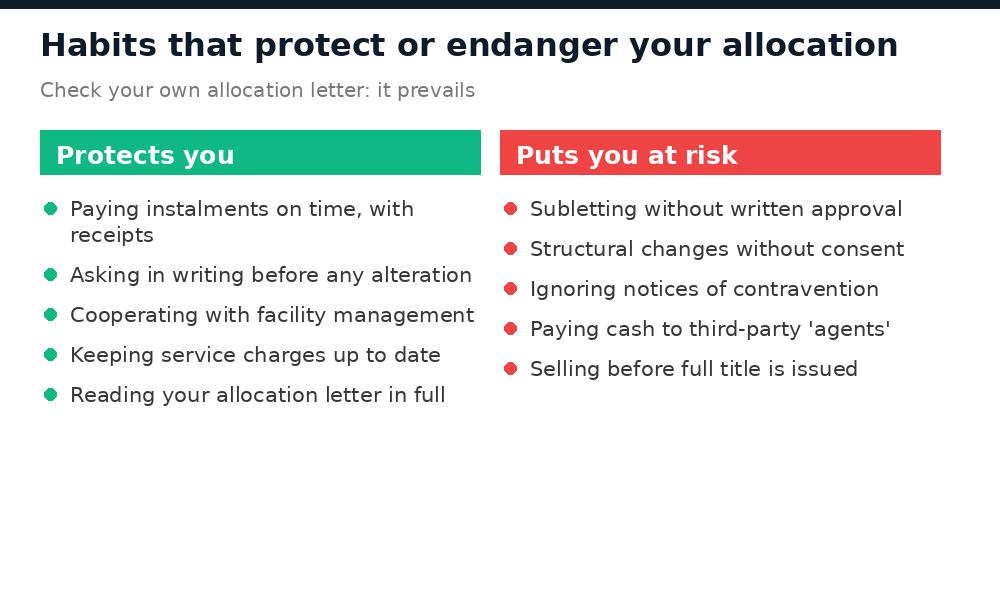
Only if your allocation terms allow it, and usually only with written approval. Government homes are allocated to specific people, often on income or occupation criteria, and schemes commonly restrict letting to third parties. Subletting without approval is one of the fastest ways to receive a notice of contravention. If you need to move temporarily, contact the ministry before you leave and get any permission in writing.
Can you make alterations to the unit?
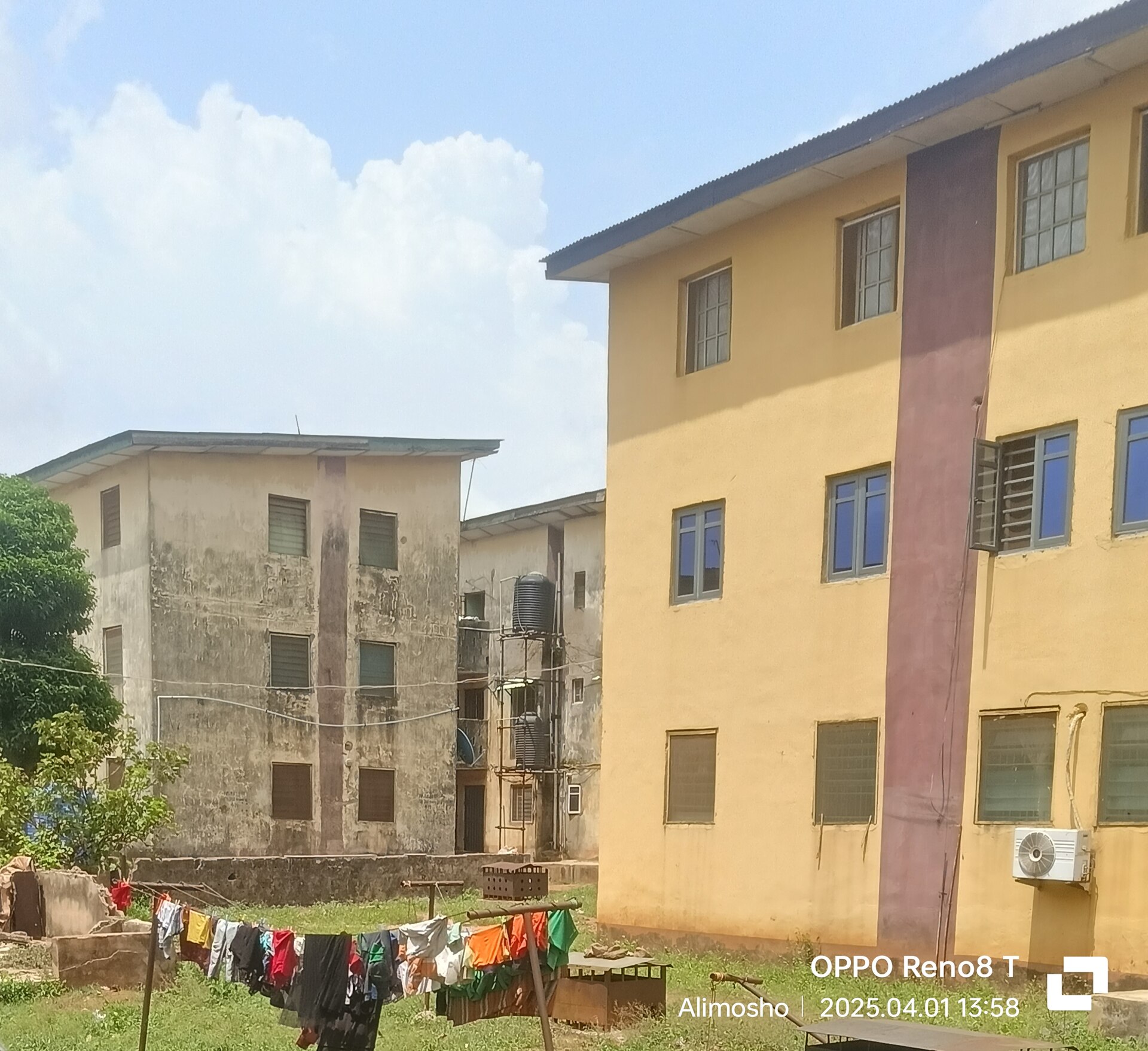
Minor, reversible changes inside your home are generally a different matter from structural work, extensions or changes to façades and shared areas. The October meeting stressed preserving the physical integrity and market value of state housing assets, which is exactly what unauthorised structural alterations threaten. Ask in writing before any work beyond simple decoration, and keep the approval with your documents.
Shared spaces raise their own questions. Service charges fund the upkeep of roads, lighting, security and common areas; our article on service charges in Lagos estates explains what you should be paying for and how to challenge an unfair bill.
Can you sell before receiving full title?
This is where many allottees get into trouble. If you are still paying under a rent-to-own or mortgage scheme, you generally do not yet hold full title, and a private “sale” of your allocation may be invalid or breach your terms. Buyers should be equally cautious: purchasing a government allocation from someone who has not completed payments or received title documents is a high-risk transaction. Before buying any estate property, check its status as described in our guide to verifying Lagos estates and layout approvals.
What documents should every allottee keep?
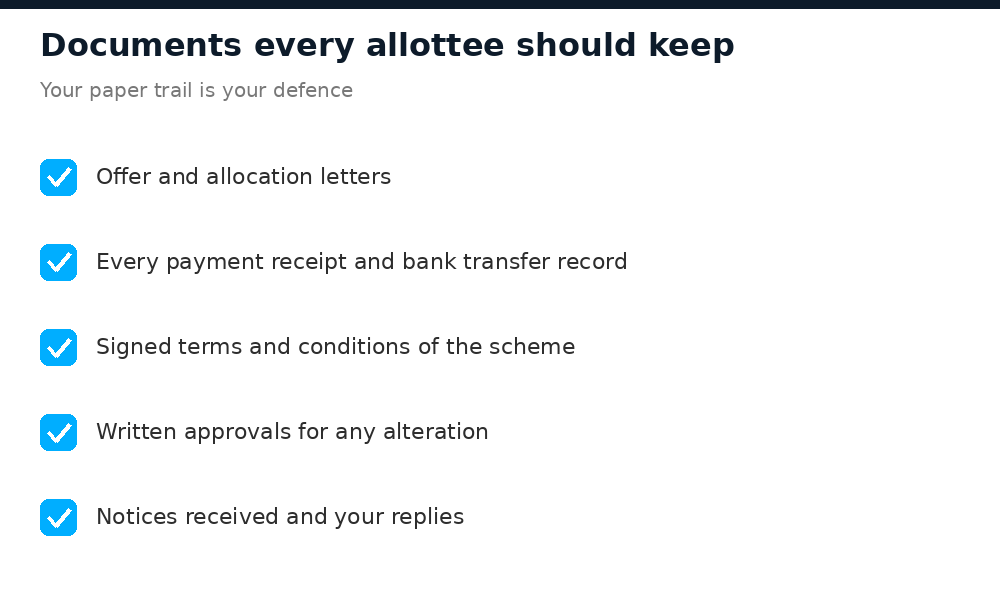
Your paper trail is your defence if a dispute arises. Keep safely, in paper and scanned form: your offer and allocation letters; every payment receipt and bank transfer record; the signed terms and conditions of the scheme; written approvals for any alteration; and every notice you receive, with a copy of your reply. Pay only through official channels: the state’s real estate regulator says it has recovered more than ₦270 million from fraudulent estate agents, a reminder that fake agents target popular schemes.
What if you receive a notice of contravention?
Do not ignore it. Read it carefully, note the deadline, and respond in writing, explaining the situation and, where relevant, the steps you are taking to comply. Keep proof of delivery. Most disputes can be resolved at this stage, since revocation is meant to be a last resort after due process. If the matter escalates, get legal advice; our article on tenancy disputes and notices in Lagos explains how notices and timelines work more generally.
Sources
- “Sanwo-Olu says Lagos delivered 10,623 housing units across 23 estates”, Nairametrics, 24 October 2026.
- “Lagos State Pledges Support for Sustainable Housing”, Voice of Nigeria, 11 October 2026.
Frequently asked questions
How many homes has Lagos State delivered since 2019?
Governor Sanwo-Olu says 10,623 units across 23 estates, 4,414 funded from the state budget and 6,209 through public-private partnerships, with 14,022 expected once ongoing schemes are complete.
Can Lagos revoke a government home allocation?
Yes, if an allottee breaches the allocation terms. The Ministry of Housing describes revocation as a last resort, after notices of contravention and due legal process.
Can I rent out my Lagos government home?
Only if your allocation terms allow it, usually with written approval. Subletting without permission can trigger a notice of contravention.
Can I renovate or extend my unit?
Simple decoration is generally fine, but structural work, extensions or façade changes need prior written approval under most scheme terms.
Can I sell my allocation before getting title?
Generally not safely. If you have not completed payments or received title documents, a private sale may breach your terms and leave the buyer exposed.
What should I do if I receive a notice of contravention?
Respond in writing before the deadline, explain the situation and the steps you are taking to comply, keep proof of delivery, and seek legal advice if the matter escalates.