Two specific technologies are starting to change how property is priced and verified in Nigeria: AI-assisted valuation, which estimates a property’s market value from data rather than a manual comparison alone, and blockchain-based title verification, which creates a tamper-resistant digital record of a title once it has been checked. Both are genuinely useful. Neither replaces the fundamentals — visiting the property, working with a qualified professional, and checking the title at the relevant Land Registry.
This article looks specifically at these two tools: what they do, what they get right, and where buyers still need to do the traditional legwork.
How AI-Assisted Valuation Works
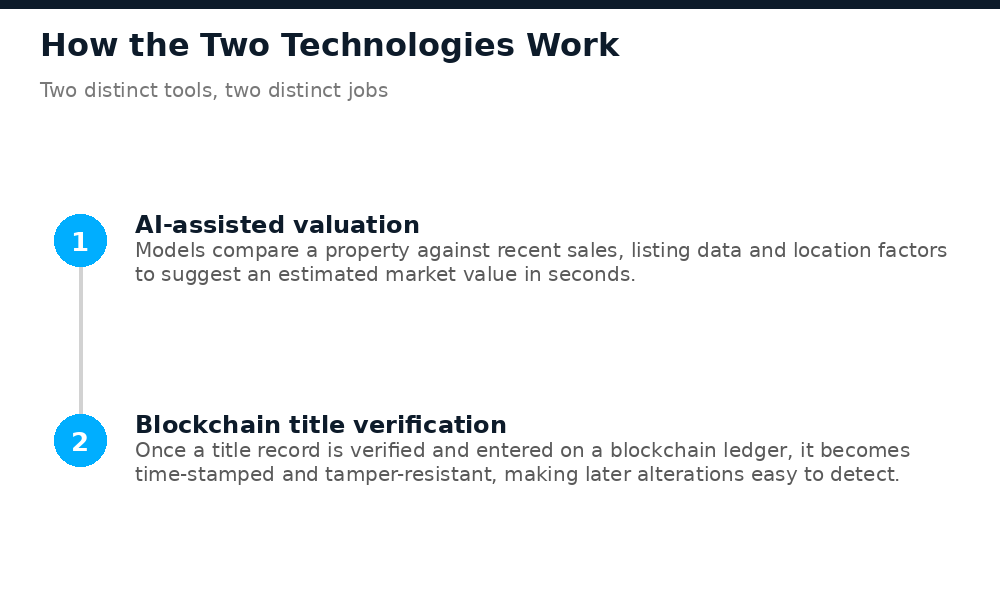
Instead of a valuer manually comparing a property to a handful of recent sales they know about, an AI valuation model draws on a much larger pool of listing and transaction data — recent sale and rental prices, location factors, property size and condition — to produce an estimated market value in a fraction of the time. For a buyer or seller, this is useful as a fast first-pass sanity check on a listed or offered price, and it can flag properties priced noticeably outside the pattern of comparable listings, worth a closer look before you proceed.
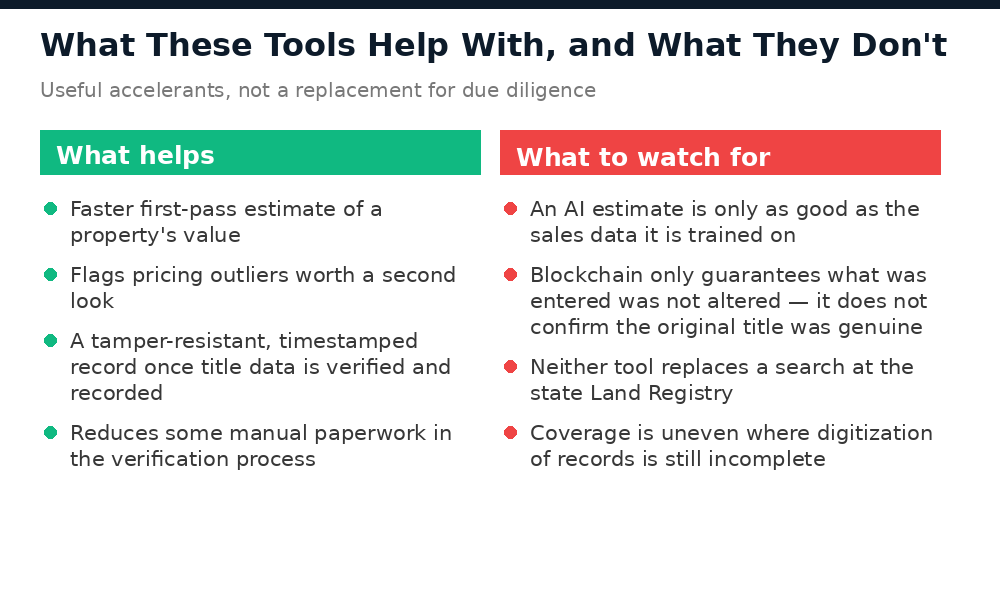
What it cannot do is fully replace an in-person inspection or the judgment of a registered valuer, especially for higher-value transactions. An AI estimate is only as reliable as the data it was trained on, and data quality and coverage still vary considerably across Nigerian cities and neighborhoods — dense, well-documented markets like parts of Lagos and Abuja tend to produce more reliable estimates than areas with fewer digitized records.
How Blockchain Title Verification Works
Land title fraud — including disputes over informal land sales and fake Certificates of Occupancy — is a well-known risk in the Nigerian property market, and it has been covered in depth elsewhere on this site. What’s new is the emerging use of blockchain technology as a layer on top of the existing verification process: once a title record has been checked and confirmed against official sources, it can be entered onto a blockchain ledger, where it becomes time-stamped and effectively tamper-resistant. Any later attempt to alter that recorded entry becomes detectable, which adds a useful layer of traceability once a title is on the ledger.
The key word is once. A blockchain record only guarantees that what was entered has not been secretly altered afterward — it does not, by itself, guarantee that what was entered was accurate or genuine in the first place. If a fraudulent title makes it onto a blockchain ledger, the ledger will faithfully preserve a fraudulent record. The verification work still has to happen before the record is created, not instead of it.
What These Tools Can Replace, and What They Can’t
Used well, AI valuation and blockchain title tools speed up parts of the process that used to take days of manual comparison and paperwork, and they can reduce certain categories of fraud risk by making tampering easier to detect after the fact. What they do not replace: a physical search at the relevant state Land Registry, an in-person or video-verified check on the seller’s identity, and — for significant transactions — an independent valuation from a registered valuer. Coverage of both technologies also remains uneven, with better data and adoption in Lagos and Abuja than in many secondary cities and rural areas.
Practical Guidance for Buyers
If a listing platform or agent presents you with an AI-generated valuation or a blockchain-verified title record, treat both as a useful starting point rather than a finish line.
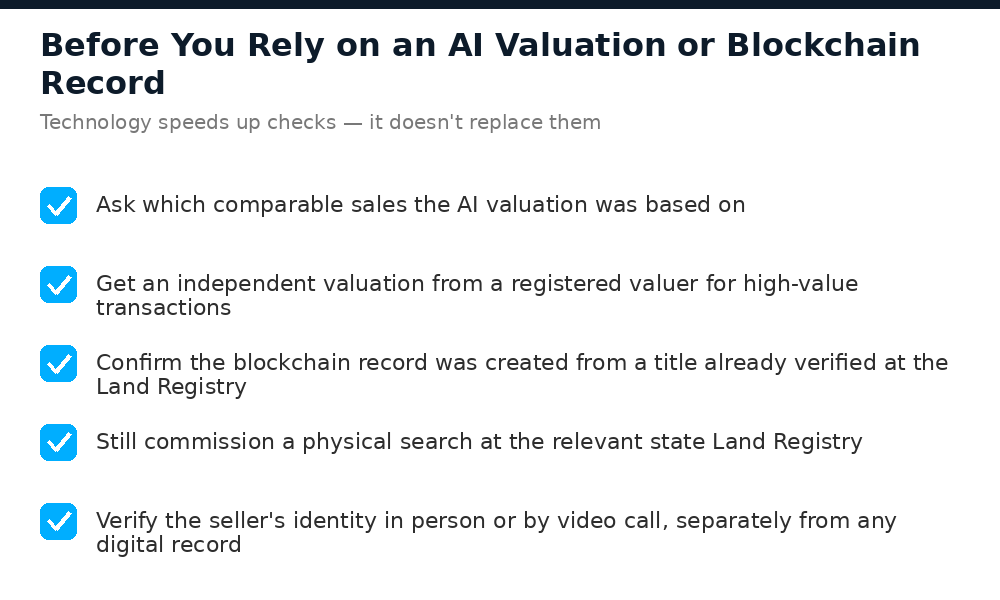
Ask what data an AI valuation was based on, confirm that a blockchain title entry was created from a title already verified at the Land Registry rather than simply self-reported, and — for any transaction of real size — still commission the traditional professional checks: a registry search, a lawyer’s review, and a verified identity check on the seller. The technology is there to make those checks faster and more transparent, not to make them unnecessary.
Frequently Asked Questions
Can an AI valuation replace a professional property valuer in Nigeria?
For a quick first-pass estimate, yes it can help. For significant transactions, an independent valuation from a registered valuer is still recommended, since AI estimates depend heavily on the quality and coverage of the underlying data.
Does a blockchain record guarantee a property title is genuine?
No. It guarantees that a recorded entry has not been altered after the fact. It does not verify that the information entered was accurate in the first place — the verification still needs to happen before the record is created, typically through a search at the state Land Registry.
Are these tools available across all of Nigeria?
Coverage is strongest in Lagos and Abuja, where data and digital adoption are more advanced. Secondary cities and rural areas generally have less digitized coverage, so traditional verification remains especially important there.