Ask five builders what a 3-bedroom bungalow costs in Nigeria today and you will get five different numbers, because the true answer depends on your state, your cement supplier, your labour rates and how you buy materials. What we can do honestly is show you the biggest swing factor in your budget, the current price backdrop, and a method for phasing the build so you are never borrowing at interest to keep going.
The 2026 cost backdrop
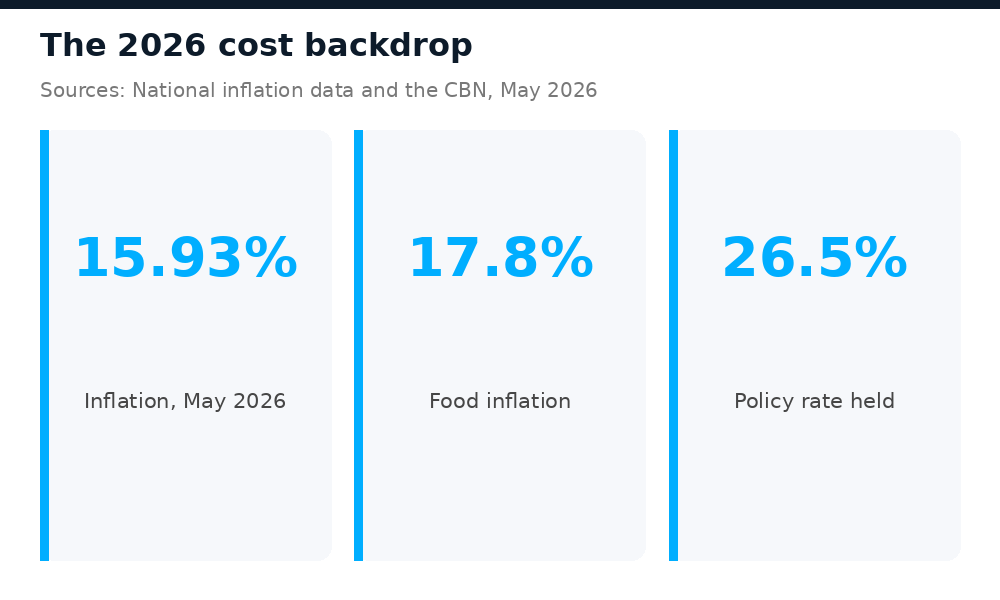
Nigeria’s headline inflation rose to 15.93% in May 2026, the highest reading since the previous November, with food inflation at 17.8% and transport at 17.1% — partly a knock-on effect of the March 2026 fuel price shock. The Central Bank of Nigeria held its Monetary Policy Rate at 26.5% at its May 2026 meeting, citing high electricity tariffs and FX demand as persistent pressures on prices.
Cement: the single biggest swing factor
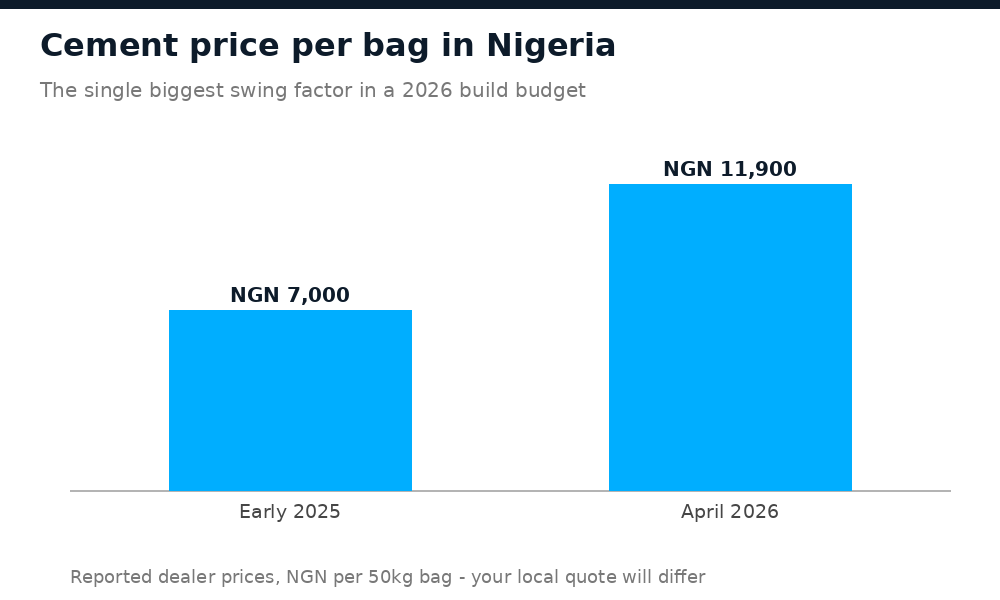
Of everything in a build budget, cement has moved the most. Reported dealer prices rose from roughly NGN 7,000 per bag in early 2025 to NGN 11,800–12,000 per bag by April 2026 — close to doubling in little over a year.
Price also varies significantly by how you buy. Retail, bag by bag, sits at the top of the reported range; buying wholesale from a depot or a full trailer load brings the per-bag price down meaningfully.
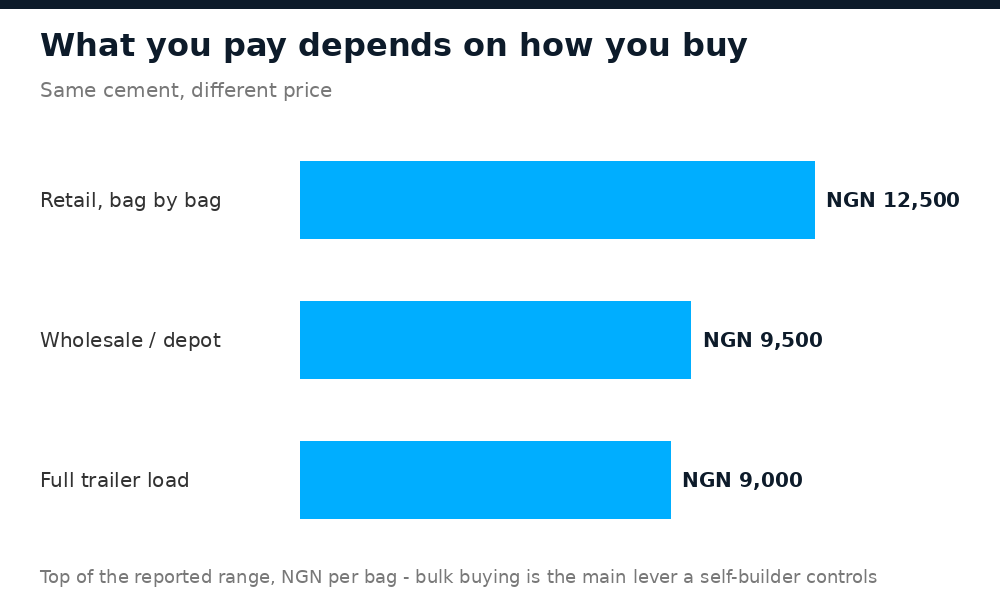
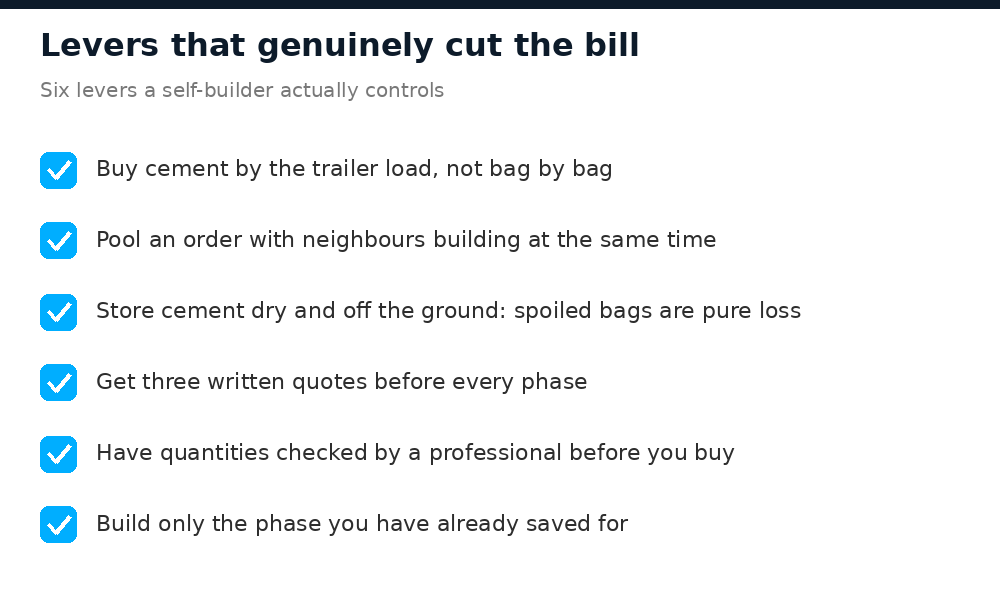
Bulk buying — coordinating a full trailer load, potentially with neighbours also building nearby — is the main lever an ordinary self-builder actually controls. It will not offset a market-wide price swing, but it consistently beats paying retail bag by bag.
A transparent way to think about your own budget
We are deliberately not publishing a single “total cost to build a 3-bedroom bungalow” figure here. No credible, sourced bag-count exists for a generic 3-bedroom bungalow — actual cement consumption depends heavily on your design, foundation type, wall thickness and finish level, and any number we gave you would be invented, not sourced. Instead, here is the arithmetic to run with your own numbers.
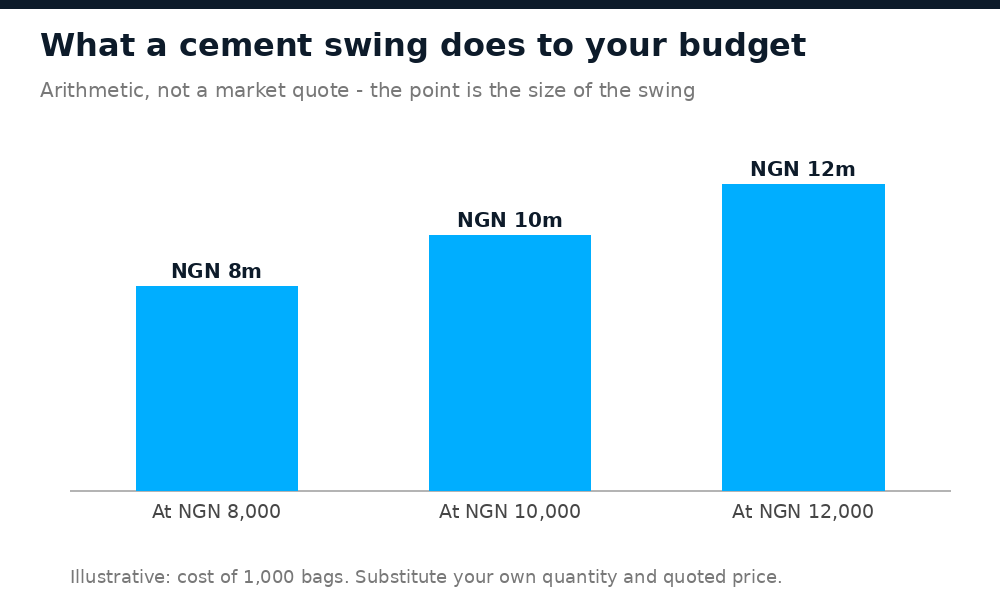
Get a real bag-count estimate from a builder or quantity surveyor based on your actual plan, then multiply by the per-bag price you can genuinely secure — not the headline retail figure. That single substitution will tell you more about your real cost than any generic total would.
How to cut your build cost
Building in phases, without borrowing at interest
With material costs volatile and the policy rate at 26.5%, interest-bearing construction loans are an expensive way to bridge a build. A phased, pay-as-you-build approach — funded from savings, cooperative contributions, or staged self-build over time — lets you pause between phases when prices spike, instead of being locked into a loan repayment schedule regardless of what cement costs that month.
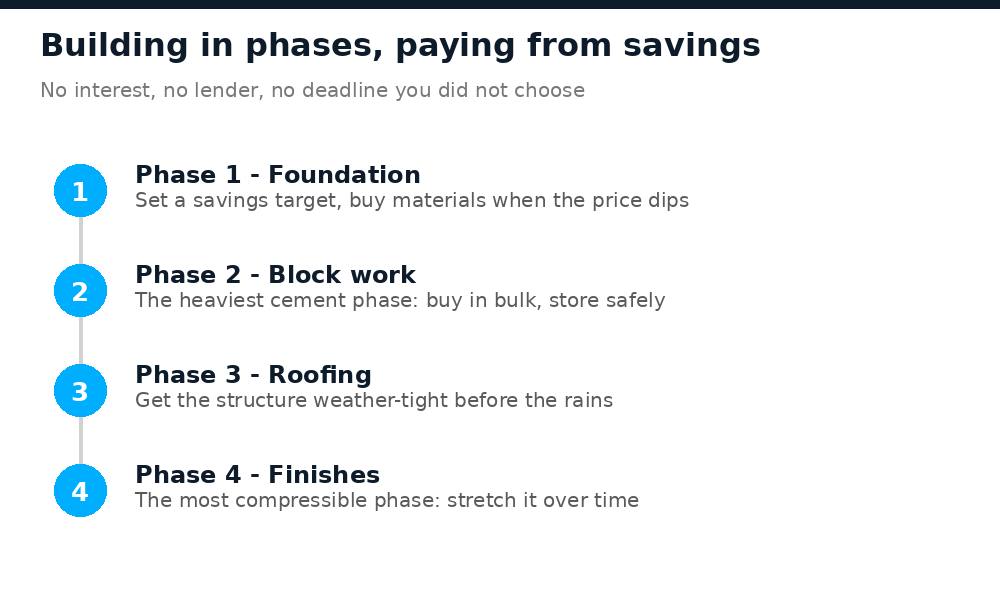
Savings groups and building cooperatives are common ways Nigerians fund a phased build without interest: a group pools contributions on a rotating basis, and each member builds as their turn and their site progress allow. It is slower than a lump-sum loan, but it means the pace of your build follows what you can actually afford, not a repayment calendar.
Frequently asked questions
Why won’t you give me a single naira total for the whole house?
Because a credible total requires an actual bill of quantities for your specific design — bag count, block count, roofing sheets, and so on — which varies far too much between houses to generalise honestly. A number that looks precise but is not sourced would mislead you more than it would help.
Is buying all my cement in one trailer load before I start a good idea?
It locks in bulk pricing, but only makes sense if you have secure, dry storage and a build schedule that will actually use it within a reasonable window — cement stored too long can lose strength. Match your buying quantity to your realistic pace of work, not just the best price per bag.
What is the safest way to fund a self-build without a bank loan?
Phased construction funded from savings or a building cooperative is the most common interest-free route: you build only as far as funds on hand allow, pause between phases as needed, and avoid a fixed repayment obligation that does not care whether cement prices spiked that month.
Cement prices, inflation figures and the policy rate cited here reflect publicly reported figures as of mid-2026 and will move. Get a current, local quote before budgeting any real project.