Property prices in Lagos and Abuja keep climbing, the Naira has been volatile, and land banking carries its own risks of fraud and long waiting periods before a plot turns into usable capital. For many Nigerians who want exposure to real estate but can’t stretch to a full down payment, there is a simpler entry point that gets far less attention than it deserves: Real Estate Investment Trusts (REITs).
What Is a REIT, and How Do Nigerian REITs Work?
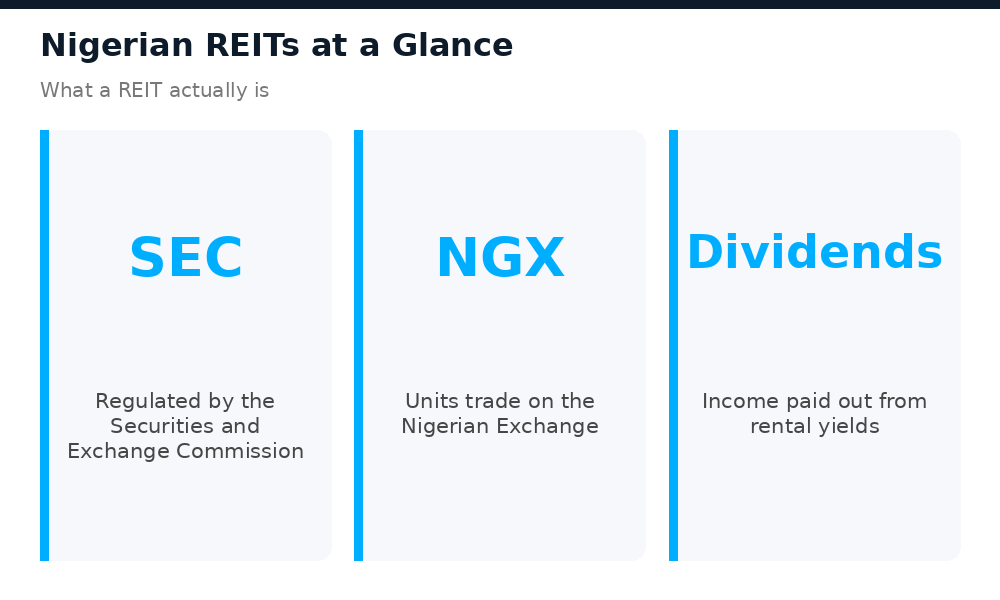
A REIT is a company that owns and manages a portfolio of income-generating properties — think shopping malls, office blocks, and residential estates — and distributes most of its rental income to investors as dividends. Instead of buying a single building outright, you buy units in the trust, the same way you’d buy shares in a listed company.
In Nigeria, REITs are regulated by the Securities and Exchange Commission (SEC) and their units trade on the Nigerian Exchange (NGX). A handful of REITs are currently listed, giving retail investors a regulated, exchange-traded way to hold a slice of commercial and residential property without ever touching a title deed.
Why Consider a REIT Instead of Buying Property Directly?
Direct property ownership in Nigeria still has real advantages — control, potential capital appreciation, and the option to live in what you own. But it also demands a large lump sum, ties up your capital for years, and exposes you to the well-known headaches of land title verification, omo-onile disputes, and construction costs.
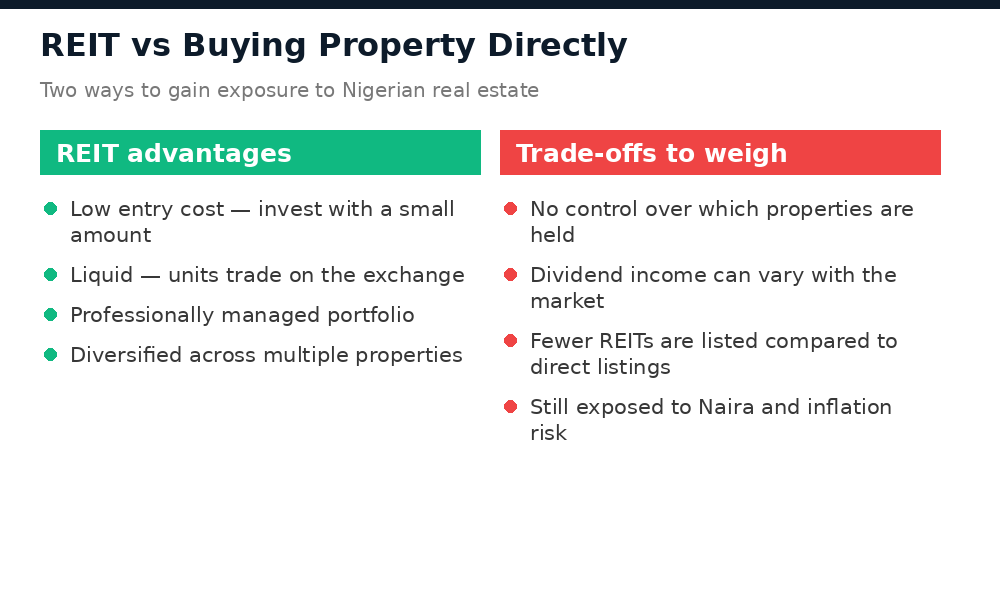
A REIT flips several of those trade-offs:
- Low entry cost. You can start with a fraction of what a plot or apartment deposit would cost.
- Liquidity. Units trade on the NGX, so you can sell without waiting months for a buyer the way you might with a physical property.
- Professional management. Property selection, tenants, and maintenance are handled by the trust, not you.
- Diversification. Your money is spread across multiple properties and often multiple property types, instead of being concentrated in one asset.
What to Check Before You Invest
Not all REITs perform the same way, so treat this like any other investment decision rather than a shortcut:
- Dividend track record. Look at how consistently the trust has paid out over recent years, not just the most recent yield.
- Underlying assets. Find out what the trust actually owns — commercial offices, retail, or residential — since each segment carries different risk and demand patterns.
- Trading liquidity. Some Nigerian REITs trade thinly on the NGX; check recent volumes before assuming you can exit quickly.
- Fees. Management and administrative fees eat into your returns — read the trust’s disclosures.
The Risks You Still Carry
A REIT removes some headaches but doesn’t remove market risk. Dividend income can fluctuate with occupancy rates and rental demand. The Nigerian REIT market is also smaller and less liquid than markets like the US or South Africa, which means fewer choices and wider price swings on lower trading volumes. And because REITs are Naira-denominated and hold local assets, they carry the same currency and inflation exposure as the rest of the Nigerian economy.
How to Get Started
To invest, you’ll need a brokerage account with a stockbroker licensed to trade on the NGX — the same type of account you’d use to buy shares. From there, you can buy units in any of the SEC-regulated REITs listed on the exchange, often starting with a modest sum well below what a property deposit would require. A licensed stockbroker or investment adviser can walk you through the current list of listed trusts and their historical performance.
A Complement, Not a Replacement
REITs won’t replace the appeal of owning a home or a plot of land outright, and they shouldn’t be your only real estate exposure if you’re building long-term wealth. But as a liquid, professionally managed, and regulated way to start investing in Nigerian real estate with a modest amount of capital, they deserve a place in the conversation alongside land banking, off-plan purchases, and traditional buy-to-let.