Ask anyone shopping for a home in Lagos or Abuja in 2026 what worries them most, and forex will come up before interest rates, before agency fees, sometimes even before the price itself. The naira’s exchange rate against the dollar has become one of the biggest hidden variables in the Nigerian property market — and it affects far more than the headline sticker price.
Why the Exchange Rate Suddenly Matters to Homebuyers
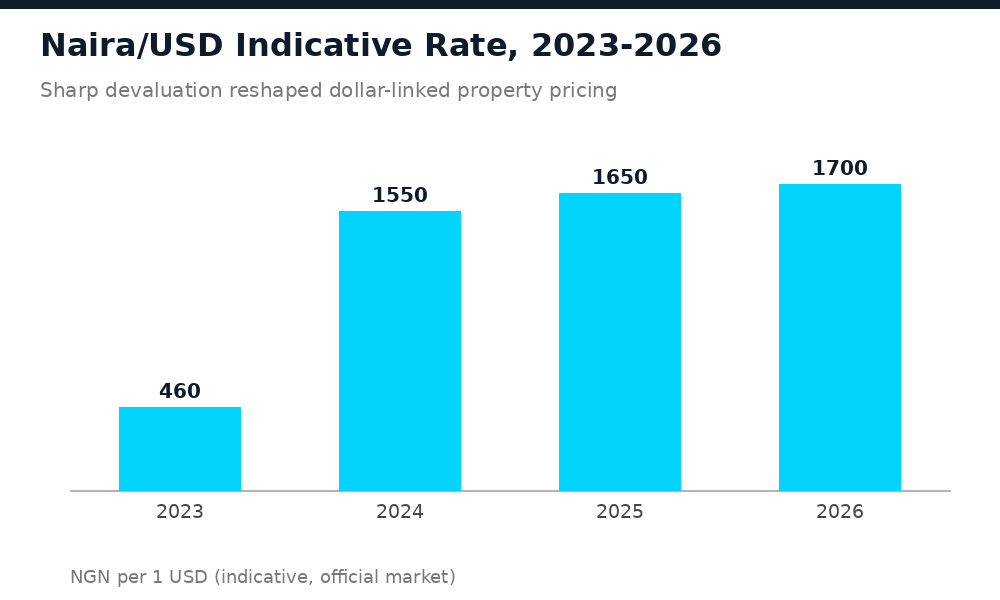
For years, real estate in Nigeria was priced almost entirely in naira, with the exception of a few ultra-prime developments. That has changed. As the naira has moved sharply since the 2023 unification of official and parallel exchange rates, more developers — especially in Lagos’s high-end corridors — now quote prices in dollars or peg naira prices to a daily exchange rate. That shifts the currency risk from the seller to the buyer, and it means the “price” of a property can change from one week to the next without a single brick being moved.
How Dollar-Pegged Pricing Works in Prime Markets
In neighborhoods like Banana Island, Ikoyi, and parts of Abuja’s Maitama and Asokoro, it’s now common to see listings priced in USD, with the naira equivalent calculated at the point of payment. This protects developers who imported materials, equipment, and fittings in dollars, but it puts pressure on local buyers earning naira salaries. It also creates an opening for diaspora buyers, who often hold savings in stronger currencies and can move faster when the naira weakens.
Mortgage Rates Under Pressure
The forex story doesn’t stop at the purchase price — it runs straight into financing. Nigeria’s benchmark interest rate has stayed high to defend the naira and control inflation, and commercial bank mortgage rates have followed, often landing well above what many salaried buyers can comfortably service. The National Housing Fund (NHF) still offers a much lower single-digit rate, but its loan ceiling and lengthy processing keep it out of reach for many buyers who need to move quickly in a rising market.
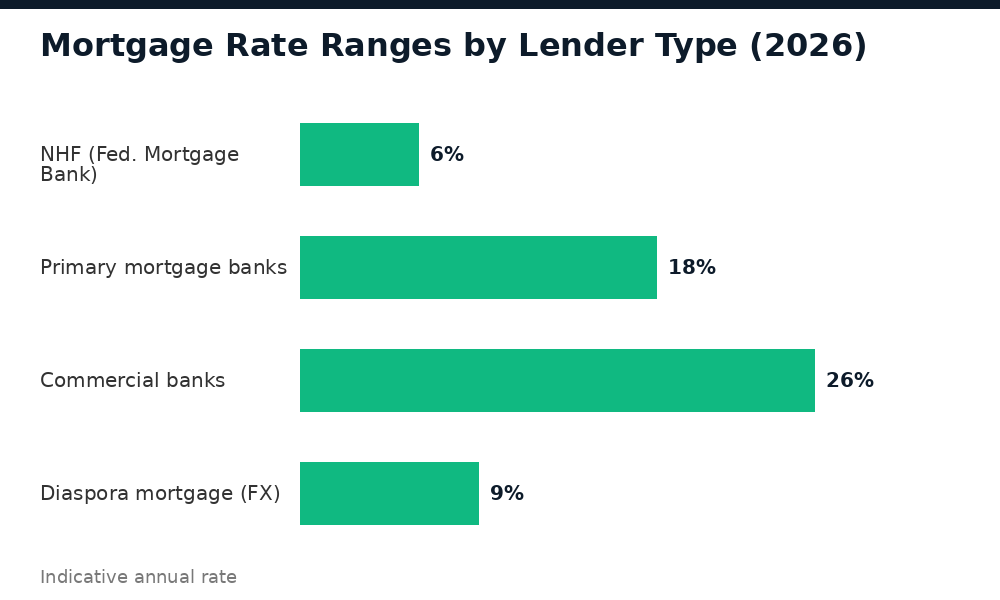
Primary mortgage banks sit in between — faster than NHF, cheaper than commercial banks, but still demanding a solid income history and often a naira-denominated repayment plan that doesn’t hedge against further devaluation.
Winners and Losers
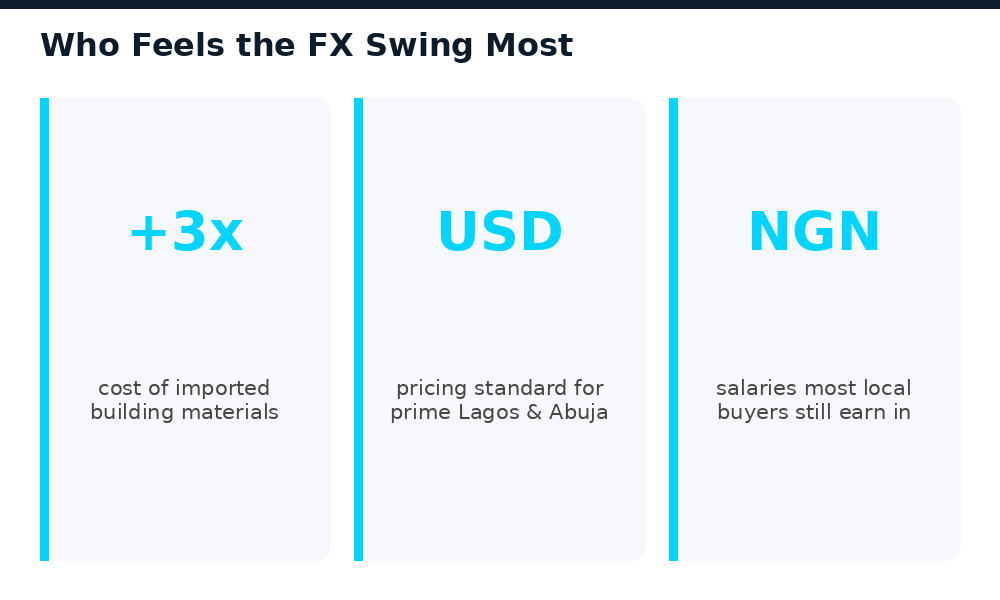
Forex volatility doesn’t affect everyone the same way. Diaspora buyers paying in dollars effectively get a discount every time the naira weakens further. Developers who priced and imported in dollars protect their margins. But local buyers and tenants, paid in naira, absorb both the higher cost of imported building materials and higher borrowing costs — a squeeze that shows up as slower sales in the mid-market segment even as prime, dollar-priced listings keep moving.
Practical Tips for Buyers and Sellers
Whether you’re buying, selling, or building, a few habits can protect you from unpleasant surprises when the exchange rate moves:
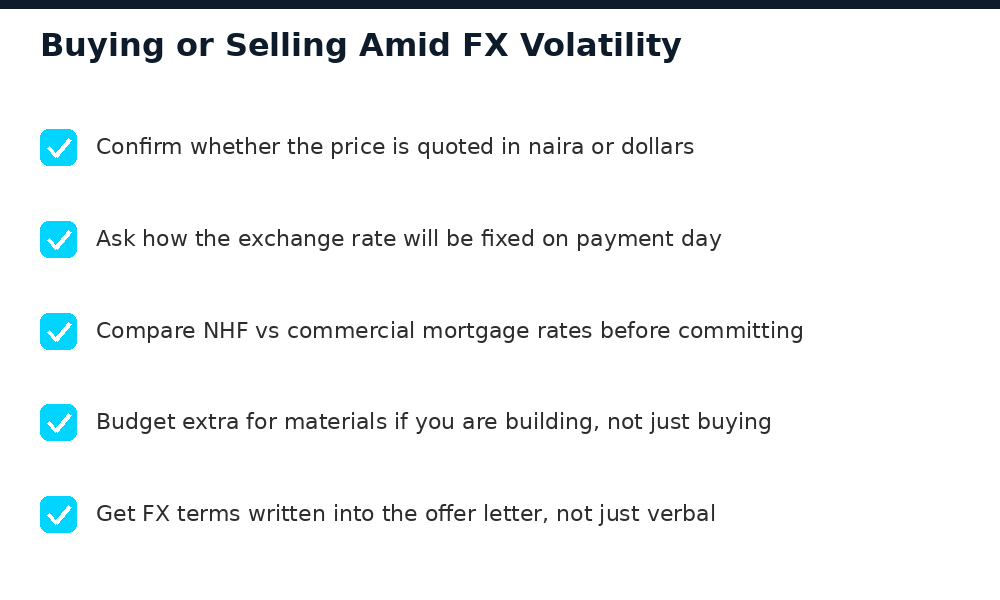
- Always ask whether a quoted price is fixed in naira or effectively pegged to the dollar.
- Get the exchange-rate mechanism for payment day written into the offer letter, not left as a verbal promise.
- Compare NHF, primary mortgage bank, and commercial bank rates before signing — the gap between them is wide enough to change your monthly budget significantly.
- If you’re building rather than buying outright, budget extra headroom for imported materials, which remain the most exposed to currency swings.
What This Means Going Forward
Forex volatility isn’t a temporary inconvenience in the Nigerian property market — it has become a structural feature that buyers, sellers, and lenders now plan around. Understanding how a listing is priced, and how your financing is exposed to the exchange rate, is now as important as checking the title documents.