Demolitions have returned to the headlines in Lagos in 2026 — and with them, real hardship. Beyond the immediate loss for those affected, the wave of demolitions is quietly doing something else: pushing rents higher across the city. If you’re renting or buying, understanding this link — and knowing how to check a property — can save you money and heartbreak.
How demolitions push rents up
The mechanism is simple supply and demand. Every demolished building removes homes from an already tight market, while displaced residents immediately compete for whatever is left. That surge in demand, against shrinking supply, drives landlords to raise asking rents. In practice, a neighbourhood hit by demolitions often sees rents jump in the surrounding areas that absorb the displaced tenants.
How to check a property isn’t at risk
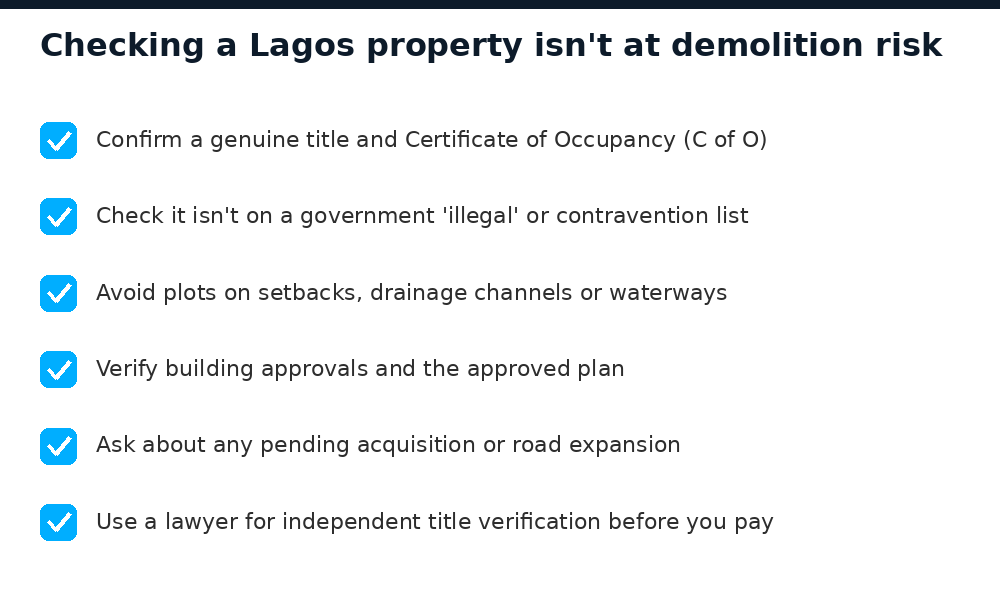
Before you commit, run through the essentials: confirm a genuine title and Certificate of Occupancy (C of O), make sure the property isn’t on any government “illegal” or contravention list, and avoid plots sitting on setbacks, drainage channels or waterways — prime targets for demolition. Check that the building has approvals, ask about any pending acquisition or road expansion, and use a lawyer for independent verification.
Before you sign: a simple due-diligence routine
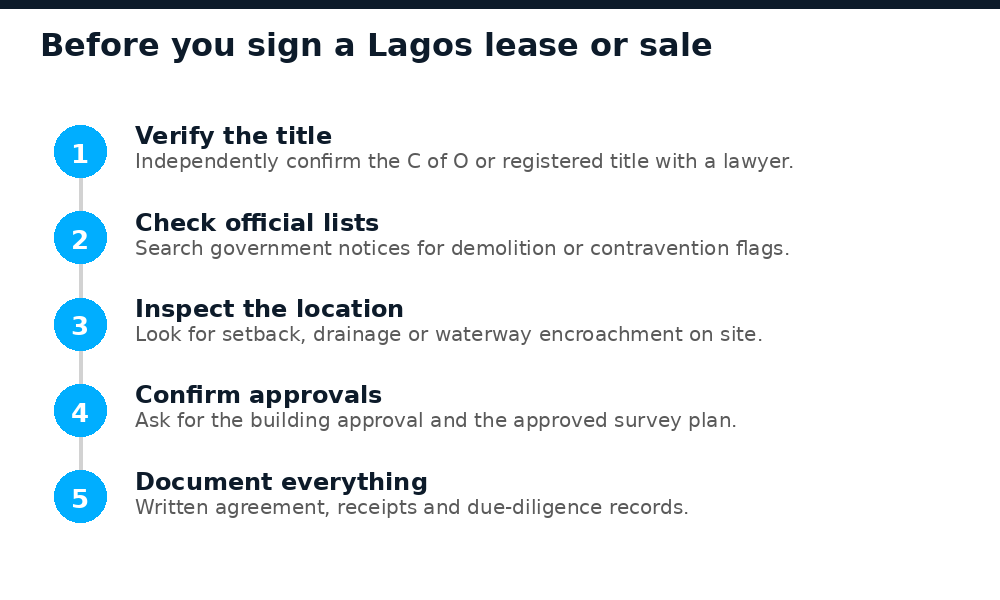
Follow the steps in order: verify the title, check official lists, inspect the location on site, confirm approvals, and document everything in writing. Skipping any of these is how tenants and buyers end up watching a bulldozer arrive.
Red flags to walk away from
- No C of O or registered title — you can’t confirm the land is legally held.
- Built on a setback, canal or waterway — a classic demolition trigger.
- No building approval or a plan that doesn’t match what’s on the ground.
- The property appears on a government contravention or demolition notice.
- A price that looks too good to be true — it often reflects hidden risk.
Frequently asked questions
Can a tenant lose out if a rented home is demolished?
Yes — you can lose your home and your advance rent with little recourse. That’s why demolition-risk checks matter even when you’re only renting.
How do I check a government demolition or contravention list?
Ask your lawyer to search the relevant state agency’s notices and confirm the property’s status before you pay anything.
Does a fence or a “C of O” signboard prove the land is safe?
No. Signboards can be fake and fences prove nothing. Only independent verification of the title and approvals gives you real assurance.
Bottom line: in a market where demolitions are lifting rents, the best protection is due diligence. Verify the title, avoid setbacks and waterways, check official lists, and never sign — to rent or to buy — without doing the homework.