Not long ago, finding a home in Lagos or Abuja meant calling around, trusting a street agent, and paying cash on the spot with little paper trail. That’s still common today, but a growing share of Nigerians are now searching, verifying, and even paying for property through digital platforms — and the shift is changing what “doing things properly” looks like in real estate.
Digital Listing Platforms and Virtual Tours
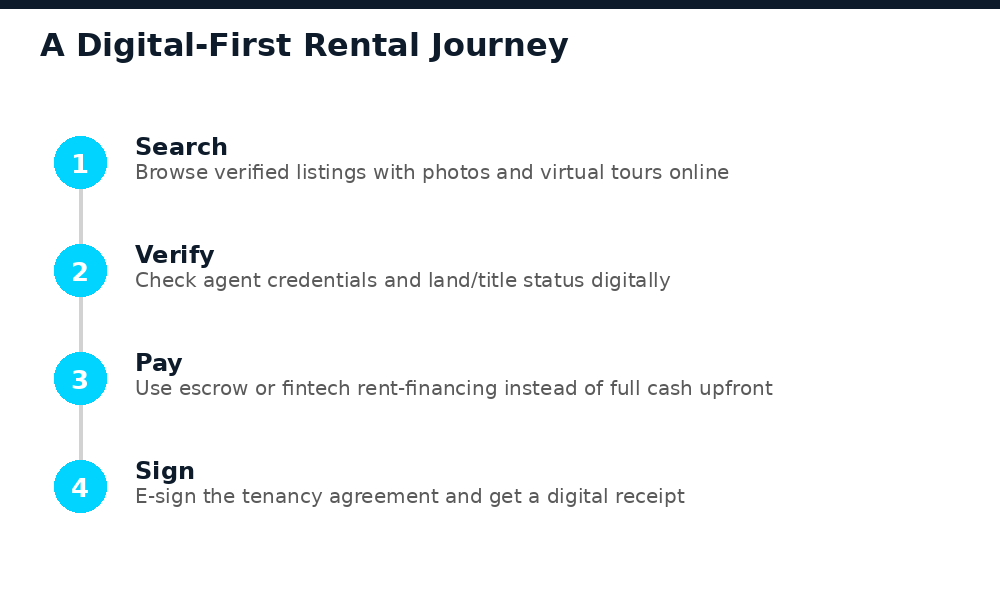
Online listing platforms have made it possible to browse verified properties with real photos, floor plans, and in some cases video or virtual walkthroughs, before ever visiting in person. For buyers relocating between cities, or for diaspora Nigerians shopping from abroad, this cuts out a huge amount of wasted travel and reduces reliance on a single agent’s word for what a property actually looks like.
Fintech: Rent Financing and Digital Escrow
The bigger shift may be in how people pay. Nigeria’s rental culture has long demanded one, two, or even three years of rent upfront — a huge barrier for many tenants. A new wave of rent-financing fintech products now lets tenants pay monthly or quarterly while the platform settles the landlord upfront, for a fee. Alongside this, digital escrow services are starting to appear in property sales, holding funds until agreed conditions — like title verification — are met, instead of buyers wiring money directly to an unverified seller.
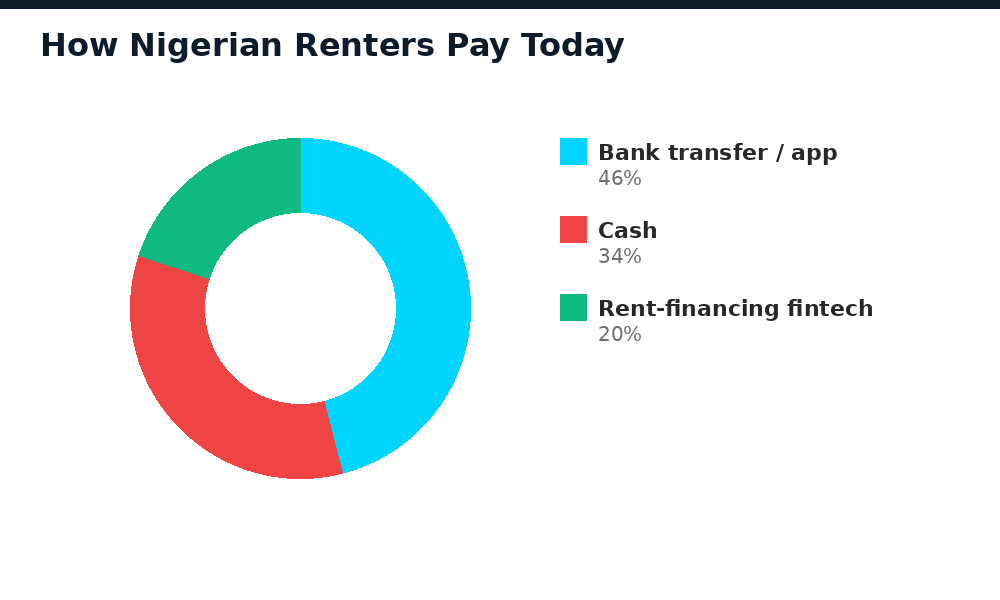
Cash still accounts for a large share of transactions, especially outside Lagos and Abuja, but the trend line is clearly moving toward bank transfers and fintech-mediated payments, which leave a verifiable record — useful for tenants and landlords alike if a dispute ever arises.
Land Title Verification Goes Digital
One of the most persistent risks in Nigerian real estate is buying land or property with a fake or disputed Certificate of Occupancy. Several state land registries and private platforms now offer online or app-based verification tools that let buyers cross-check a title before money changes hands, rather than relying solely on a lawyer’s manual search — which remains recommended, but is now often paired with a faster digital first pass.
What to Weigh Before Going Fully Digital
PropTech isn’t a guarantee against every risk, and adoption is uneven across the country.
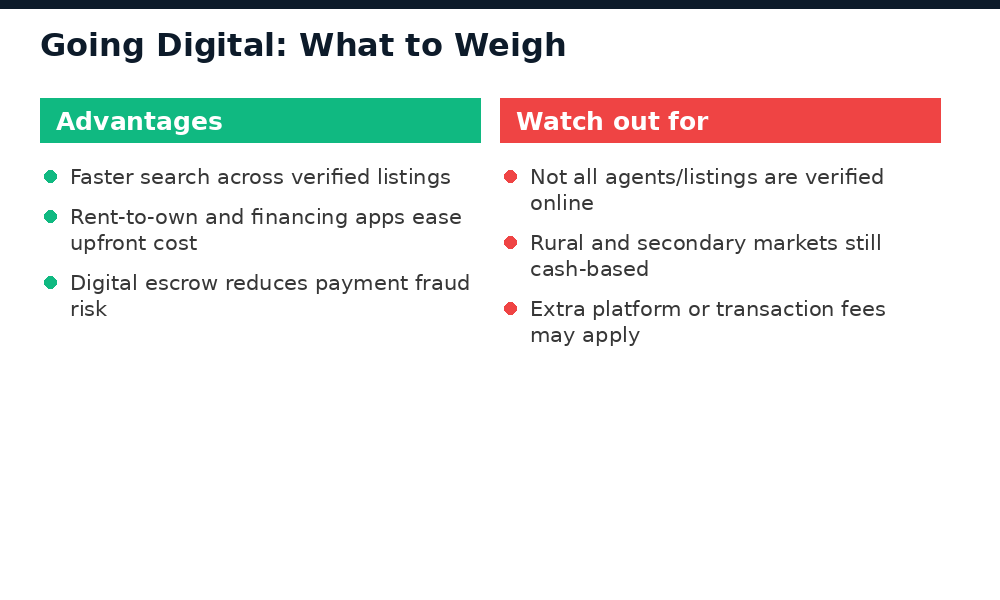
- Not every listing or agent on a platform is independently verified — due diligence is still necessary.
- Rural areas and many secondary cities remain largely cash-based, with limited platform coverage.
- Platform and payment-processing fees can add a real cost on top of rent or purchase price.
The Bottom Line
Digital tools are not replacing the fundamentals of Nigerian real estate — checking title, visiting a property, working with a trustworthy agent — but they are making those steps faster, more transparent, and less dependent on cash changing hands with no paper trail. For buyers and tenants navigating an expensive and often opaque market, that shift is a meaningful one to understand and use.